
The Fat Burning Expert: The REAL Reason You’re Not Losing Belly Fat (and How To Fix It Fast!)
 347 episodes
 40.7M views
I asked my audience for the 15 most. popular unanswered questions about how. to lose fat or to gain muscle mass. The. first one, how do I lose weight fast? But we just answered that. >> Yeah. The second one is creatine is a. miracle thing that everybody should be. taking. >> There's almost nothing creatine can't. do. Wow, some statement. Next, is there any harm in eating too. much protein? It's rare, and in fact, almost everybody who has some degree of. an issue with their body fat levels. under consume protein. The next question. is about PCOS. What would you say to a. woman struggling with PCOS in terms of.
dietary prescription? That's a damn good. question, man. Can I go into detail with. this? Because a lot of people are very. misinformed about this stuff. >> The floor is yours. Okay, so Alan Aragon. has been using science to help elite. athletes unlock peak performance for. over 30 years. And now he's breaking. down the nutrition and training. strategies that actually deliver. results. It's important to take an. evidence-based approach to diet, nutrition, training, supplementation. Because if you don't, then you end up. wasting a lot of time. So let's start.
with protein. So how much protein should. I be eating to gain muscle? What is your. goal body weight? It's around 90. Take. 90 and multiply that by. There's your protein target. What about. calorie restriction? I've heard you say. that 10 or 20% of your calories can come. from pretty much anything you want. Literally anything. So I could eat. McDonald's or something, and I could. still lose weight theoretically. That's. true. And this is reflected in research. along with diet breaks. That's one of. the tactics that you can use for a. long-term adherence to a plan. And I'll. explain how. I also wanted to talk about.
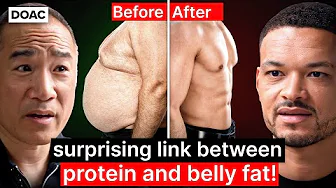
the ketogenic diets, menopause, fasting, sugars, and this. That that always gets me, man. That that. picture always gets me. Why? I used to. drink heavily. I was overworked and. trying to be the best father and the. best husband. And it got real bad. I just needed to stop. And I did. How? I. just. Wow, really? Yes. I see messages all the time in the. comment section that some of you didn't. realize you didn't subscribe. So if you.
could do me a favor and double-check if. you're a subscriber to this channel, that would be tremendously appreciated. It's the simple, it's the free thing. that anybody that watches this show. frequently can do to help us here to. keep everything going in this show in. the trajectory it's on. So please do. double-check if you subscribed, and. thank you so much. Because in a strange. way you are you're part of our history, and you're on this journey with us, and. I appreciate you for that. So yeah, thank you. Alan, why should I listen to you? What have.
you done in your career in over the last. 30 years that. has given you the knowledge, the. information, the wisdom that you have on. nutrition, dieting, fitness, etc.? Who is Alan? I have over 30 years of experience in. the field. The first 10 years consisted. of personal training. The second decade. of my career was nutritional counseling. Just counseling people on on how to eat, what to eat. And then the third decade.
of my career, which is actually. running on 13 years now, is the research. and education side. My colleagues and I, we in quotes do the science, we publish. the science. I've been a part of. 30 publications. 30 studies? >> Yeah. Yeah, a combination of narrative. reviews, systematic reviews and. meta-analyses, and randomized controlled. trials. And how many people have you. worked with directly over the last 30. years in terms of in your your.
nutritional counseling role, but also as. a as a trainer? Individually, it's. it's triple digits. Groups, potentially. quadruple. Yeah. And some of those people that you've. worked with over the years are fairly. high profile. Yeah. Probably my. most interesting story is getting an. email from Steve Austin. And and. wrestling fans know him as Stone Cold.
Steve Austin. In so many words, he said, "Hey Alan, I've been. I've been doing my research, and. you're you're the guy. So I want to work. with you. Um I know that you mentioned that you're. not working with clients, but could you. please make an exception for me? Here's. my number." What did you do with him? With Stone Cold? I. helped him get his nutrition right for. his. uh in quotes uh. comeback to television. It was mainly.
focused on. primarily fat loss. And you worked with Derek Fisher as. well, who's the five-time NBA champion. Yes. Longtime LA Lakers player. Yeah. And Pete Sampras, the former. world number one tennis player, Grand. Slam champion. Yeah, Pete Sampras, that's right. When people come to you, and when they message you and DM you, there's probably similar themes. Similar. themes as to like what they're trying to. accomplish and what their goal is. If. you just from the top of your head had. to state.
the most popular themes that people are. trying to accomplish, what are they? How to improve body composition. What. does that mean? How to lose fat. and or gain muscle. One of the things that I'm I'm. particularly intrigued by, which kind of. dovetails into both of those subjects of. fat and muscle gain, is the subject of. protein. And um. because there's been so much said about. protein. You know, when I was growing. up, they said you have to have protein.
right after you eat your meal, you have. to have this much protein, you have to. have it before you eat your meal, it. doesn't matter when you have it. So I. want to do a bit of myth-busting on the. subject of protein. What are what are the biggest myths that. people currently believe about protein. consumption? The biggest myth is that they have the. hierarchy of importance all screwed up. Like everybody's worried about how much. protein per meal you need to have for. this or that goal. When do you need to. time protein relative to the training.
bout or waking or sleeping or all that. stuff. The. main thing they need to be focused on is. how much protein do they need to eat by. the end of the day. Because when you hit. that goal, you've basically won the whole game. The. the relative placement, the. distribution, and the doses of the. protein, the timing of it, oh man, it rarely matters. It it it rarely matters beyond. getting that protein in in a way that's.
comfortable and convenient for you and. in such a way that you can stick to in. the long term. Some people are more like. grazers. Some people are more like. gorgers. They're both fine as long as you hit the. total by the end of the day. So the. hierarchy is. of utmost importance, get your total. daily protein. And then of secondary importance would. be what is the distribution of the. constituent doses of that protein total. through the day. And then of third. importance down here is like.
when specifically are you supposed to. time that protein around the the. training bout? So So yeah, the. what the way that I put it is like this. The day the daily total for protein, that is the cake. The distribution. of the doses through the day, that's the. icing on the cake, and it's a very thin. layer of icing. And how do we know that? How do we know that it doesn't really. matter what time you have the protein, and that the most important thing is. just making sure you get the protein.
That's a great question. The reason that we know that. distribution doesn't matter as much as. the total is through a couple lines of. evidence that I can think of. So there's. Yasuda who who compared a three-meal. model with a two-meal model. And the three-meal model had superior. effects for um for muscle gain. But there is a study that was just. published. gosh, within the last month.
It was better from a methodology. standpoint because they fed the subjects. an abundance of protein. So Yasuda and. colleagues who and colleagues who tested. the two versus three, he totaled. everybody out at. 1.3 g per kilogram of body weight per. day. That's the total daily protein. dose. And so we know now that that's. a suboptimal total if you want to push. muscle growth. So for pushing muscle. growth, we know you you should be at 1.6.
g per kilogram of body weight, which. translates to 0.7 g per pound of body. weight. That's where you really want to be if. you want to maximize. muscular adaptations to resistance. training, like muscle size and strength. gains. So. this latest study, they compared three. uh three protein feedings versus. five protein feedings. And the totals. of protein intake in the day in both.
groups were around a gram per pound. So. right around 2.2-ish g per kilogram of. body weight. So we have the. optimized daily total, and we're testing. three versus five protein feedings. We're doing progressive resistance. training. And this is the key. This. happened in resistance-trained subjects. There were no significant differences in. in muscle size and strength gain between. the three protein feedings a day.
versus five protein feedings a day. And. this is the best-designed study to date. on the on the topic. And and so Because. when I grew up and read stuff about. gaining muscle, it said you had to have. like five or six meals a day. >> Mhm. Um it said that's what bodybuilders do. Whenever we we talk about any kind of. physical goal, any any sort of fitness. goal, we have to address. two main things. So who's the Who's the. population.
and what goal are we talking about? And. maybe a third thing we need to address. is what is at stake. So, what level are. we talking about? So, population, goal, what level? What's at stake? So, with bodybuilders. at elite levels, it is. most of them. consume. five, six meals a day. Some of them do like even seven or eight. in the off-season.
And these are individuals who are. enhanced. And so, their ceiling for muscle growth. and their rates of muscle muscle growth. are significantly higher than people who. are, in quotes, natural. And the amount of food that these. individuals can process and use. productively is significantly more. And so, with that population, I can see it being. pretty standard for them to be consuming. at least five, six.
meals a day. Since they tend to have to Since they. tend to be eating double. the amount of of the average person. And so, but the interesting thing that. happens is that the guidelines from this. very sort of fringe elite population, that's what trickles down into the. general public and then they're stuck. thinking, "Okay, maybe I need to eat. every 2.5 hours or or some such." But. yeah, with the with the general. population and even um. recreational athletes and people who are.
hobbyists and and and stuff, you really. the impact of actual protein. distribution is. inconsequential compared to the total. So, how much protein should I be eating. a day? Cuz you I think you disagree with. the recommended daily sort of allowance. that they suggest we. as a I think I'm 90 kg. Mhm. How much protein should I be eating to. gain muscle? Lean muscle mass.
Okay. So, we're going to apply you to the. population and the goal and the stakes. questions. So, what would you say your. training status. is? You're obviously not a beginner. Um. so, you're somewhere between. intermediate and advanced. >> Mhm. Right? >> Yeah. So, what is your goal? Just to lose fat and gain muscle. Okay. Familiar story, I'm sure.
Okay. The way that I do it is I go. 1.6 to 2.2 g per kilogram of target body. weight or goal body weight. Mhm. So, that's the range that you would be. looking at. Now, with you in particular, I would go more towards the upper end. Because you mentioned that you part of. your goal is. to decrease body fat to a. to a to a minor degree, but you're still.
you're pushing the envelope cuz you're. already lean. So, there's an interesting thing about. highballing protein that facilitates. that. reduction in body fat. So, if if I have. a lot of protein, it helps to reduce body fat. Yeah. Yeah, it does. The way that we know this is because. there have been several studies now. Four trials, one case study. um by Joey Antonio and colleagues.
And they. examined the effect of very high protein. intakes anywhere from about 3.3 all the. way to 4.4 g per kilogram of body. weight. Roughly, gosh, you know, a gram and a half to 2 g per pound. Is. that because you're eating less. carbohydrates? You're sort of. substituting it for something else. essentially in terms of you feeling. hungry. So, if I'm having 3.3 g of. protein, I'm probably not going to be.
having something else which is more. fatty. Yeah, that's right. That's right. So, this particular line of research was. done on people who are resistance. training. And it was done in free-living. conditions. And they just gave them the assignment. to essentially. increase their their protein intake by. 50%. And. literally add. 80 to 100 g of protein on top of their.
existing habitual dietary intakes. So, what would you say to me then? You'd say. push even higher. in terms of grams per kilogram of body. weight. What is your goal body weight? I don't. actually have a goal body weight to be. honest. I just have more of a. a goal in terms of like strength. >> How about this? Were you ever in the. shape that you. are wanting to be in? And what What was. your body weight at that time? I was. around 90. I think I was just a little. bit below 90 kg. So, I think I was about.
88. Okay. So, you know what? Let's take. 90 Yeah. and multiply that by 2.2. 90 * 2.2. There's your protein target. 198 grams. of protein a day. So, if my if a protein. shake gives me 20 g of protein, I I need. to have basically 10 g 10 protein shakes. a day. That seems like a lot of protein. That. is a lot of protein. Uh I I would. give a little caveat here.
You can probably achieve your your goal. with. 1.6. g per kilogram of body weight. So, that. would be the lower end. So, multiply 90. by 1.6. and that's where you can start. So, if. if that 198 number seems. kind of far-fetched. or even a little bit like, "Hmm, how. would I even achieve that?" then start. off at the lower end. Do women have a. different prescription in this regard?
Is there a different approach if you're. a woman? Yeah, if you're a woman, you would. almost always start at the low end. Because women have a higher proportion. of body fat and and by default, they. have a lower proportion of lean mass. So, with women, it would almost always. be, "All right, let's start at 1.6 g per. kilogram of target body weight and see. how you do with that." And we can always. ratchet it up if needed. Is there any. such harm in eating too much protein?
It's rare. Uh you would have to have a. pre-existing chronic kidney disease. and then it's generally not a good thing. to be highballing the protein. Um but even people with chronic kidney. disease have to realize the tradeoff. that they're incurring with a low. protein diet and. older age sarcopenia and stuff. How are. they going to mitigate that? But for the. general healthy population, there have been many studies that have. rolled out looking at effects on kidney.
function, liver function, bone health. And there is. virtually zero threat to those organ. systems that that you would think might. be threatened by a high protein intake. So, the human organism. perfectly well equipped to metabolize. and handle high protein amounts. And not. all protein is equal, I guess, because. you've got you've got these animal. proteins and then plant proteins. um that come from things like eggs and. so on. What is the best type of protein,
do you think? Is there such a thing? I think that the best thing you can do. is get a mix of different types of. protein. It is true that gram for gram, generally speaking, animal proteins are. more, in quotes, anabolic. than plant proteins, meaning. that they stimulate a greater. growth response of muscle. >> at the muscle level. So, they stimulate. muscle protein synthesis more potently.
than plant proteins. And. there are There's maybe one exception to. that that we know of, which is. mycoprotein, which is a fungus-based. protein that actually outperformed milk. protein for stimulating muscle protein. synthesis. So, there's interesting exceptions like. that. But generally speaking, animal. proteins are. better for muscle protein synthesis than. plant proteins. Now, with that said, Stephen,
once you consume a certain amount of. total daily protein, then it doesn't appear to matter how. much of your protein is animal-based. versus how much your pro your protein is. plant-based if we're looking at things. like muscle size and strength gain. Because this has been actually. compared. in controlled interventions where um. vegan group has been compared with an. omnivore group. and total daily protein was optimized at.
1.6 g per kilogram of body weight per. day or 0.7 g per pound in both groups. Progressive resistance training for 12. weeks. No significant differences between. groups in muscle size and strength gain, whether it was a omnivorous protein. intake or whether it was a. plant-based protein intake. And we have. two studies showing that now. You must have so many moments where. you're working with someone through your. career who's got a goal and he feels. like they just can't accomplish it. Where you find yourself saying the same.
thing over and over again. to people about how to lose fat or to. gain muscle mass. Is that same thing just to eat have more. protein? It's a common thing with the general. population, with the lay public. Like my my protein target is. at least 160 g a day. So, I just make sure that I have four meals. with at least 40 g. of of protein per day. And it's so easy.
to do. It's incredibly easy to do. because. two of my meals per day are just real. whole foods. And then two of my meals per day, two to. three, are protein smoothies. And so, uh it is just so incredibly easy. for me to to get my protein intake. through like two scoops of protein, bam, that's almost 50 g of protein right. there. So, you have two of those a day, got. more than half my protein covered. But. if I if I have all of my protein in one. meal,
Mhm. is that going to impact my ability to. gain muscle or lose fat if I have it all. in one meal? If I just have like one. massive protein shake? If I put like. five scoops? Now, if you were telling me, "Hey Alan, I want to place really good in the. nationals this year. The NPC nationals. classic. classic physique or you know, classic. bodybuilding or just any one of the. physique divisions, I would say, you know, you are not going to want to try to get. all your protein in a single meal.
Because what we want to do is we want to. maximize the number of micro anabolic. events in the course of the day. We want. to maximize the amount of times you. maximally stimulate muscle protein. synthesis in the course of the day. And. just from a a pragmatic standpoint, you could probably do that at least. three or four times. And if you're able to do that three or. four times in the day versus once.
with that one big banger of a meal, then you might actually over time gain. more muscle than you would have. And this could make the difference. between placings at the end of the uh. end of the prep period. So, but. as somebody in the general population, theoretically, you could. Mhm. I am going to challenge you to do. something here. I asked my audience. about weight loss and asked them for. their 15 most popular questions that are.
currently unanswered for them. >> All right. >> about weight loss. The first one was "How do I lose weight. fast?" Ha. So, essentially, you can engage. what would could be classified as a as a. as a protein-sparing modified fast. You're basically crash dieting. Um. I don't love doing that though, honestly. Listen, I've got a wedding. I need to I. need to lose weight fast. How do I lose. weight fast? Losing weight fast. So, you.
would basically do an aggressive caloric. deficit. So, anywhere I I would say. 20% below your maintenance needs, 20 to. possibly 40 depending on the individual, percent below your maintenance needs. And then. keep the protein high. And this is going to default you to. relatively low carbohydrate, relatively. low fat. And. just train regularly. Don't hurt.
yourself. Um Protein high, you said? Yeah, protein. high. And calories-wise, so for example, if you maintained at we'll we'll just. take a round number, 2,000 calories. So, you would just lop off about a third. of that. And then just go. And see if you can. maintain your fat loss. while maintaining strength levels. relatively. You're it's almost.
inevitable to crash diet. and. lose some strength in the process. But I. mean, we're we're talking about. something that's not an optimal process. But yeah, that that's that's the game. Basically, aggressive caloric deficit, keep protein very high. And then you just go And the deficit. could be anywhere from 500 to a. thousand-ish calories below what you. normally take in. The second one is, "Why do I regain weight after stopping.
Ozempic, Wegovy, etc.?". All right, so. those GLP-1. RAs, the recep- GLP-1 receptor agonist. drugs like Wegovy, they. have um at least three different. mechanisms that all converge towards. almost nullifying your your hunger and. your appetite response. And so, when you cut out the drug, then. your. normal appetite comes back.
And. an unfortunate reality for a lot of. GLP-1 users when they get off the drug. is. they just don't have the habits and they. don't have the skills necessarily to. maintain their weight loss. And of. course, once again, they're fighting. their appetite. So, I would say. perhaps try um a weaning off process. instead of just a jumping off process. A. weaning off process where you are.
reinforcing. countermeasures to overeating, where you. are reinforcing. good training habits and good dietary. habits. And we're all where you're also. progressively learning how to live with. and deal with sensations of hunger. between meals. And just train those habits in. And uh. it can be done. I I I. I'm not one of the people in the camp. who says it's impossible to get off of.
weight loss drugs successfully. So, number three again is, "Is my. metabolism damaged after dieting?" And. they're asking a question here about. something called adaptive thermogenesis. >> Yeah. Okay, so this is not really a. short shot here. Okay. So, the the. process of metabolic adaptation is kind. of complex. And it happens in both directions, whether you try to gain weight or. whether you try to lose weight. So, earlier we talked about uh an increase. in non-exercise activity thermogenesis.
or NEAT. An increase in NEAT in response. to an increase in calories. So, that occurs and. across studies, I I gave an example that. showed a 336. calorie increase in NEAT when a thousand. calories were stacked on top of people's. maintenance. But there are other studies where the. caloric increase was not quite that. aggressive. So, so on average, increases. in. NEAT or non-exercise activity.
thermogenesis are about two to 300. calories. So, you increase your energy. expenditure about two to 300 calories. if you're overeating. Yeah. So, your. body will start to twitch more and move. more, burning more non-active calories. >> That's correct. When you're overeating, yeah. So, that's an adap- that's an. adaptation. >> That that's the adaptation in the. caloric surplus side. So, in the caloric deficit side, it's just the opposite thing. Just the. mirror of it. So, people decrease their.
non-exercise activity thermogenesis or. their NEAT. They decrease it on average. like two to three-ish hundred calories. Okay. as a result of dieting. So, this. is part of a metabolic adaptation that. occurs with dieting. Is this why people. don't think the calories in, calories. out system is working for them. sometimes? Because they don't realize. that if they're in a cal- calorie. deficit sometimes, they are subconsciously moving around.
less, which means that they're burning. less calories. Um so, actually, they're not in a. calorie deficit. Yes, that's correct. So, with the. dieting side of things, which is much. more of a public health issue, weight. loss is is much more of a. a necessity than the weight gain. It's it's tougher for most people. Because in addition to the decrease in. non-exercise activity that'll cost. people two to 300-ish calories that. they're. no longer uh no longer burning at the.
end of the dieting cycle, then you've got. what's called. adaptive thermoreduction. Okay, so you mentioned adaptive. thermogenesis. Technically, that is the there's. non-shivering adaptive thermogenesis and. there's shivering adaptive. thermogenesis, but that all has to do. with increases in energy expenditure in. response to cold environments. So, that's technically that's what adaptive. thermogenesis is. It's increase in. energy expenditure.
When people diet, there's something called adaptive. thermoreduction. And that is the. part of it is a decrease in non-exercise. activity thermogenesis. You're you're. basically saying that the body changes. when we're in a calorie deficit. >> Mhm. It stops doing as much. Yes, that's. the activity part. Yeah. But then. there's also the metabolic part. So, we've got a decrease in non-exercise. activity. Yeah. Then we have. adaptive thermoreduction,
which has to do with a. a metabolic component that has to do. with the sympathetic nervous system. And. also. potentially thyroid output as well. So, there's this metabolic change that. goes on. And there's. behavioral or activity change that goes. on. So, when people say I've got a slow. metabolism, they might be telling the truth. When. people say I have a slow metabolism, what's usually happening. is they have a pretty massive drop in. NEAT or non-exercise activity to the.
order of two to 300 calories. Now, adaptive thermoreduction. is another 50 to 100 calories. Okay. So, we're looking at in the neighborhood of. like. possibly three, four hundred calories. that they're no longer burning as a. result of the dieting process. Now, if. you take somebody with um. clinically diagnosed. hypothyroidism,
then their resting metabolic rate could. be 7 to 10% lower than somebody without. a thyroid issue. So, you add another. 1 to 200 calories less burned over here, then you have the potential. for 5 to 600 calories. uh of energy expenditure that this is. challenged with. at the end of their dieting cycle. So, they're So, I guess it is kind of true. in a in a way that people understand it. that if you overeat, your metabolism. as far as they understand what their.
metabolism is, is increasing and if you. undereat, then your metabolism is. slowing down. Yes, but I have to emphasize the major. component that slows down. is your non-exercise activity. You're. not moving around as much. Yes, the. other components, like adaptive thermo. reduction and potential thyroid issues, that is the minor component. The major. component is a drop in fidgeting, a. slowing of the rate that you walk. around, an increase in the amount you. sit around. And you can control that.
Yes. It's it's hard to put a put a finger on. it, but as long as you know that stuff. goes down, I'll give you an example of. physique competitors. They are. as their cutting cutting phase. progresses, they're literally lying. around in between their cardio sessions. and their resistance training sessions. and their. Tupperware meal sessions. Okay, they're. no longer. tapping their heads, bob you know, tapping their fingers and bobbing their.
heads and they're no longer have a pep. in their step. They're no longer doing. non-exercise activities, basically. Question four. What diet actually works best for. long-term weight loss, keto, low-fat, Mediterranean, intermittent fasting and. you got to give me a. answer here. I'll say it in one sentence. The diet with enough protein, enough. total calories,
that is comprised predominantly of. healthy food choices. that fits the individual's personal. preferences and tolerances. How do I lose belly fat specifically? Can you target the belly? Targeting belly fat specifically is a. matter of targeting total body fat. You can't. necessarily.
spot reduce the belly fat. Now, if we're go a layer deeper, it is. possible for certain diets to be more. conducive to preventing visceral fat. gain or maybe even accelerating visceral. fat loss. Visceral fat is the fat in the. within the abdominal cavity around the. the organs. And so, it is possible for certain diets to be. more conducive to reductions in visceral. fat and that would be diets that have a.
lower proportion of. saturated fat. What's What's What's What's What's an. example of a saturated fat food? Land. fatty land animal meats. So, land animal. fats are going to be your saturated fats. that are more conducive to visceral fat. gain. So, if you were to switch out, let's say fatty cuts of meat, just trim. that fat out and if you replaced it with. something like avocado nuts, olive oil, seeds, On menopause, why is fat loss harder and.
what actually works? Okay. During the menopausal transition, which. begins at. a woman's mid-40s on average and then. ends in in the mid-50s, there are changes physiologically and. hormonally. that can. challenge a fitness program. So, it can. challenge their ability to execute the. fitness program and adhere to it. And so, things like. hot flashes. and joint pain,
changes in sexual function, and poor sleep, all of those things. can converge to. lead to a a decreased ability to stick. to a program and do the necessary. physical activity and dietary adherence. to reach the sort of the standard rate. of progress for body composition change. And so, the solution to that. would be simply you don't have to.
rearrange a whole program because. somebody's going through menopause. You. don't have to cut out nutrients and do. any special things. What has been effective is just lowering. the expectation of progress. So, whereas. I would typically have somebody gun for. a pound a week of fat loss, somebody in the menopausal transition, they have more challenges to that going. on simultaneously. So, we would go for. about half of that. Protein?
What do What do they do in terms of. protein? Just keep the protein high? Same range. Yeah. So, with protein, I. got to say. there's sort of a two-tiered. recommendation. So, the general public. with average goals Mhm. will do just. fine on 1.2 to 1.6 g per kilogram body. weight. That's kind of like the general. population average goals folks. Somebody like yourself, uh somebody like. me and. folks who are oriented towards maybe.
pushing the envelope. a little bit more than the average. 1.6 to 2.2 g per kilogram of body. weight. And you know, there's a little. margin over here. for people on the fringe, physique. competitors, who I would have no problem seeing them. go higher than that 2.2 g per kilogram. cut off. Is there anything else that. peri- or menopausal women need to. understand about. gaining muscle and keeping fat off when.
they're going through menopause? Is. there anything else that we've missed? You know, I would just emphasize the. understanding that midlife presents. maybe the highest point of psychological. stress. in in people's lives. So, starting from the late 40s going all. the way. into people's 50s and 60s, it's it's. like that you know, the concentrated. period in the menopausal transition, mid-40s to mid-50s, is when people are.
dealing with. ailing parents, the stress of ailing. parents, the stress of kids going. through high school or college, the. stress of. hitting a high point in their careers, the pressures thereof, the time and the. that is necessary. to allocate for all of those things. Mhm. All of those things distract from oh, I've got a fitness program here. Oh, my. coach is. making me do this and this and this and. now he's making me diet like this.
That's the thing that I would emphasize. There's nothing special or different. that needs to be done. And in fact, there's a lot of mythology that's. circulating the space right now where. coaches and gurus and even some. physicians are telling women that they. are just doomed to gain a bunch of belly. fat and lose a bunch of muscle during. menopause. It just happens, you're. doomed. Well, that's just not true. Uh there is a study called the SWAN. study, that's the longest and largest.
study of its kind. And the average amount of fat gain. during the entire menopausal transition. was 1.6 kg, which is. 3 and 1/2 lb. And the average amount of muscle loss. total during the menopausal transition. was 0.2 kg. That's about half. half a pound of muscle loss. Statistically significant? Yes. Insurmountable? No. So, and are there going to be outliers.
who experience double the muscle loss. and double the fat gain of that? Yes. But none of this is insurmountable. What. do you think about taking say HRT? Does. that help? Yeah, well well, it it helps those who. need it. So, HRT should be looked at on an. individual basis. One of the things that. really annoys the absolute crap out of. me is when I'm seeing the comment. sections on social media with people. telling everybody that hey,
you just turned 40, time to go on HRT. That is between you and your doctor. People are trying to universalize major. changes like. HRT, some people definitely benefit from it. And. just the same, there are a lot of people. who don't need it. The people that. benefit from it, do they find it easier. to gain muscle mass and to. not gain fat? Is that kind of like what.
>> That is a common Okay. That is a common. result, yes. But my thing with HRT is is this. So, there has to be. a symptomatologic reason to get on it. So, you have to be incurring or. experiencing. symptoms that are disrupting to your. quality of life, Mhm. regardless of what. your blood labs are. Like for. testosterone, for example, if you are out of range for. testosterone, on the lower end, let's.
say, but you have no symptoms. and you feel fine, you perform great in. all aspects, then. it's really up to you whether it bugs. you enough that you're below range or. lower on the lower end of the range um. to correct that. It it's up to you. And. so, symptomologically driven. Now, the. other thing to look at with HRT is and a. lot of people they get a single testing. point and they judge their need to get. on hormonal replacement therapy based on.
a single single test. What people need to do is see whether. there is some sort of trend going on in. one direction or another or not. And if that trend is going in a bad. direction over time and you you can do. this by just multiple time points over. over an extended period. It's debatable, maybe 6 months, 12 months to see what's. going on. Try to correct things through. lifestyle and diet and often they are. correctable. Um.
I've just I've come across many cases. where. a guy will be under-slept overworked. eating like crap. gets his testosterone levels tested. Oh, you're right at the bottom or you're. even below range. Oh, time for HRT. Well, hold on a second. Let's get this guy some sleep. Let's. improve his lifestyle. Improve body. composition and then bang, testosterone. levels double. This is not an uncommon thing.
And so, I'm very much a proponent of. first are there symptoms driving the. justification for HRT? And then. secondly, are we basing things on a. single time point or did we actually see. a trend over time? My next question's about PCOS. Mhm. A. lot of women are struggling with PCOS. and that's causing them to have. irregular menstrual cycles and. um. fertility issues.
What would you say to a woman who's. struggling with PCOS in terms of. dietary prescription? Okay. So, PCOS shares a lot of metabolic. characteristics with type 2 diabetes. So, um there is insulin resistance going. on. There there is. impaired glycemic control going on. And so, we can pretty much justify being.
cautious with. total amount of carbohydrate intake. with um PCOS. With type 2 diabetes, there's. two tiers of importance dietarily. So, of first importance with type 2. diabetes, you have to structure the diet. so that it allows body fat loss. The success of GLP-1 drugs has actually. proven that at the heart of type 2. diabetes. is overeating. Uh an abundance of body fat. So, the way.
that type 2 diabetes happens is in. genetically predisposed individuals, they gain total body fat and then they. gain visceral fat an. undue amount of visceral fat and then. this leads to insulin resistance and. impairment of glycemic control. So, PCOS is is very similar in this regard. Uh there is no standard or. consensus-based PCOS diet protocol. But.
because it shares so many similar. characteristics with type 2 diabetes, then we can. pretty much employ the same principles. of how we would intervene with type 2. diabetes, which would number one, put a. priority on total body fat reduction. And then tier number two would be, all. right, do we need to restrict. carbohydrates even further? And so, that would be very similar with. with PCOS and at kind of a population. level with type 2 diabetes. um roughly 130-ish grams of.
carbohydrates a day seems to be sort of. the sweet spot uh below which people. have an easier time controlling their. blood sugar than above that total. amount. But that's just a statistical. average. We still have to look at things. case by case. My girlfriend, she um has. PCOS and she did the ketogenic diet with. me. She's on it at the moment. We've. been doing it for about 8 weeks now. >> Mhm. We we do it intermittently. throughout the years. Um and she said. her menstrual cycle has perfectly. corrected itself. I think at its maximum.
it was like 60 days, her menstrual. cycle. Mhm. And then because she's. restricted her carbohydrates as you were. saying in in in this way using keto it's. it's like she said it's perfect. It's. like perfectly predictable now. That's. awesome. >> I I I say that in part because people I. think people don't with PCOS who have. irregular menstrual cycles don't often. consider that. carbohydrates, sugar, glucose, whatever. could be the perpetrator. Yeah. Yeah, well, cuz it's framed as a disease.
like you're you're born with it, maybe. it's heritable. Maybe there's an element. of truth to that, but. um it's crazy that that dietary. intervention had such a profound impact. on her menstrual cycle. It's glad to. hear that you found something that. works. Yeah. >> that's an you know, that's anytime you. present with some sort of clinical. condition. I would first tell you, hey, see see an. endocrinologist or see a doctor who. specializes in that particular issue. And in terms of menstrual cycles.
generally, if you do have an irregular. menstrual cycle, is there anything you. should be thinking about? Number one, see a doctor. Number two, consider whether or not you were. overtraining and undereating. Yeah. So, what happens with female physique. competitors? Menstrual disruption, menstrual. cessation a few months into prep. You. sometimes even a few weeks into prep. depending on how aggressive the diet is. And so, menstrual disruption is very. common in competitive athletes and in.
recreational athletes who have to. maintain a certain level of leanness. while maintaining a high volume of. exercise output. >> Is that the body from an evolutionary. perspective saying, listen, we we don't. have the energy to have a baby here? So, we're just going to shut this down. That. is right on. Mhm. So, you kind of do you don't want to be. restricting your calorie consumption too. much if you have an irregular menstrual. cycle and you're trying to correct that. Yeah. No, no.
Um the so-called female athlete triad. begins with overtraining, undereating. potential eating disorder nurturing. going on there and then down the line. the menstrual cycle gets disrupted and. stops and then hormonal changes happen. that are negative and then at ultimately. results in osteopenia. osteoporosis. And so, that chain of. events is unfortunately really common. with women who um. don't pay attention to.
healthy menstrual cycle. People use this. term all the time, muscle memory. Mhm. I I I I thought it was. nonsense. But I spoke to somebody the other day. and they said to me, actually no, your. your body does have a muscle memory, which means that if I fall off now. uh and I stop going to the gym, my body. is going to be able to get back to my. current physique faster because I was. here once upon a time. Is this is this true? That is true. There's some debate going on amongst the. community what what goes on. physiologically with like when you.
train, you create you create new. myonuclei. So, you increase your. so-called myonuclear domains and those. stay relatively permanent even during. times of detraining. But there's still the so-called. proprioceptive or motor component to. training that sticks with people. Sort. of the skill aspect of it that sticks. with people to be able to execute the. movements and do the things to cause the. adaptations. So, not only do you have.
that. muscle memory from the myonuclear domain. standpoint but you have the motor. learning and the neurological component. And to a degree, you you also have the. skeletal component to be able to. capacitate those that rebound in loading. and muscle gain muscle regain, rather. Is the gut microbiome playing a role in. my ability to lose weight? Mhm. Not a big one. Um of course, if I.
Why did you make that sound? Well, there's some people in the space. who. put the microbiome at as the master. regulator everything. But it's. definitely a part of the the axis of. organ systems that that we. manifest whatever, you know, result. we're looking at. It's part of it, yes. But it's not the the. it's not the main puppeteer of. everything. Everything works in concert. to and and I'll just give you an example. there. So, there are.
certain supplements that are um. that are claimed to be able to in quotes. fix the gut microbiome and cause greater. weight loss. So, there have been many studies looking. at this sort of phenomenon. And while there is a. statistically significant effect in some. cases the absolute amount that they can. help for things like body fat loss or. body weight loss is usually not. practically significant. It's it's too.
small to be considered meaningful. And. so, I wouldn't necessarily rely on. changes in the gut microbiome for. impacting like global changes in body. fat. Here, I have 20 eggs. I heard that you eat 20 eggs per week, which is about, you know, four eggs a. day potentially. Why do you eat so many eggs? Well, number one, I'm one of those. weirdos who actually loves eggs. I love.
the I love the taste of them. Um they're a great source of protein. Uh uh source of fat. Most of the fat in. there is oleic acid, by the way, which. is a monounsaturated fat predominates. olive oil. It's a low saturated fat. Then, of course, the knock on eggs is. their cholesterol content. Um but, interestingly, uh it's. dietary saturated fat that has the. greater magnitude of impact on blood. lipids than than dietary cholesterol, interestingly enough. I recognize that.
the major health agencies would want you. to stop your egg consumption to like one. a day, possibly two a day if you're an. elderly person. But, I. take the uh health agencies, um or even the consensus guidelines, as. a okay, that's cool. That's a good. starting point. Um I happen to like. eggs. I'll eat more than that. Check my. blood, check my health. I'm doing just. fine. So, I'm one of those people who. can do four eggs a day just fine. Is.
this part of your broader testosterone. protocol? I I like the fact that uh. eggs are conducive to testosterone. production. >> So, you're 53 years old, right? >> Yes. >> test your testosterone levels? I have not tested my testosterone levels. in forever. But, I'm not concerned with it. Because, once again, it would be a symptom-driven thing for. me to even care. So, if I was.
experiencing the symptoms of low. testosterone, then that would give me a. reason to check it out and see what's. going on. And then, I would have to take. a step back and look and see. what can I modify with lifestyle, what. what do I have available to change. non-drug wise. And you know what? If I. ever need. to take exogenous testosterone, if that. day ever comes, well, then so be it. I'm. just not there. What supplements do you. take every day? I take a multivitamin. I take two.
multivitamins, actually. Uh the reason why I take two. multivitamins is because. it really uh certain key um nutrients in. there, they they have to be in such small. amounts per single pill that it's really. just meaningless. And so, I take two. multivitamins, one of them with iron, one of them without iron. And uh I also take fish oil. Uh I take magnesium. And I take vitamin. D3.
I take vitamin C. And and by the way, I. really should preface this with this is. the broscience side of my personal. habits, because I'm taking my vitamins. more on. uh placing your bets basis, rather than, "Hey, man, this is just the bottom-line. evidence-based. I think everybody should. do this.". Okay, so I want I want to make sure. that's clear. I also take magnesium. And I also take collagen. And I also take creatine. If I told you you could only take three.
of those supplements, which three would. you pick? That's a damn good question, man. Can I have uh can can I I'm going to. count my two multis as one. So, your. multivitamin. Would Would that be the. first one? Yes. Okay, so multivitamin. And omega-3s, fish oil. Vitamin D3. So, you you sacked off the. creatine. You're a genius. That's those are those would be those. would be the top three. I would Can I.
add creatine in there? Could I squeeze. it in there? >> no, no, no. Oh, bro. >> Pick three. So, you picked the. multivitamin, omega-3, vitamin D3. Uh. well, it might humble me to kick the. creatine out. So, okay, fine. I'll I'll. leave those three. You call creatine. king creatine. Yeah. Why'd you call it. that? It's the only non-pharmacological. supplement that that. really really has a very strong and deep. and broad evidence base for. um enhancing the effects of of.
resistance training. So, strength gains. and size gains. More strength than size. This the size gains, they they come with the initial uh. loading phase, where. a lot more intramuscular water. happens, or you know, in- in-. intracellular, intramyocellular. hydration. That is the. the big immediate part of creatine that. that folks feel when they go on it and.
when they go off of it. So, you you'll. lose a few pounds of lean mass if you. get off of creatine. I call it king creatine because it has. possibly. close to a. I want to say it's reached a over a. thousand studies. And the majority of. those studies show um positive effects. Usually with with creatine, if you were. to compare a group. taking creatine versus a group not. taking creatine. So, the creatine group.
will have like a 20% increase in their. lifting capacity, whereas the. non-creatine group will have like 12-ish. percent increase in their lifting. capacity over a typical study length, 8. to 12 weeks-ish. And so, that is a significant strength. gain advantage. And over the long term, that would definitely augment muscle. hypertrophy, as well. And once you're. loaded with creatine, so. being loaded with creatine means that.
you saturate your muscle creatine. stores. And that requires either a. loading phase of 20 to 25 g per day for. 5 to 7 days, or um a maintenance phase. that you engage with 3 to 5 g a day. You'll be loaded at um about 30 days. And so, during that loading phase, it's. pretty common for people to gain roughly. 2% of their body weight um as lean mass. Hm. People seem to talk about creatine.
like it's this miracle thing that. everybody should be taking. That's one of the one of the few. supplements that it seems all the. experts I speak to about this stuff seem. to agree upon. They obviously vitamin D. and omega-3 comes up all the time and. multivitamins. But, creatine seems to Yeah, nobody. seems to have much of an issue with it. or be able to point to many side effects. of taking with it, both for men and. women. Yeah, it's got the. musculo- musculoskeletal um benefit. There Believe it or not, there's even um. benefits for creatine on on joint.
health. So, um not only that, not only. the. athletic performance and muscle. hypertrophy side, but there are things. like uh improved glucose control, improved memory. So, different domains. of cognition can be enhanced by. creatine. The. level of creatine in the brain can. increase with with supplementation. And. then, you create a pro-energy. environment in the brain, and that's how. uh these positive effects on memory.
happen with creatine supplementation, especially in people with uh cognitive. decline. So, so it there's almost nothing. creatine can't do. Wow. Hm. Some statement. A business is only as good as the people. inside it. So, how do you make sure. you're hiring the best? Our sponsor. LinkedIn can help you find these. applicants quickly. I believe in taking. time to hire slowly, but I also. understand that once you've decided to.
hire, you want to get the ball rolling. and get the best candidates in front of. you to start interviewing. And that's. where paying to promote your role on. LinkedIn makes all the difference, because you'll get applicants seven. times faster than if you post your job. for free. And even though slower, more. considered hiring is important, you. never want your hiring platforms to be. what's holding you back. LinkedIn keeps. pace. It takes care of the heavy. lifting, sending you highly skilled. candidates that you wouldn't find. anywhere else. So, when the time comes. to make your next hire, make it count. and promote your job on LinkedIn. Head.
to linkedin.com/doac. That's linkedin.com/doac. Terms and conditions apply. Right, guys. I'm going to go get Steve. The guest is here. Ready? Come in. OH MY GOD, STEVE. WHAT? WHAT ARE YOU DOING? THIS IS UH THE. boncharge face mask. It's uh good for. blemishes, wrinkles. Uh clears up the skin. It's red light. Have you not used it before? No. You. tried this before? It's um. It's really really good. It shines red. light on your face, which helps increase.
and boost collagen production. Actually. found it out cuz of the missus. Seen her. wearing it, she identified me a couple. of nights in a row. Um I thought it was. to scare people with, but actually, it's. really really good for your skin. So, they are a sponsor of the podcast, and. uh I've been using it every day for. about a year and a half now. Wow. You're. glowing. Well, Steve, you're glowing. It's great. Yes. And uh boncharge ships. worldwide with easy returns and a. year-long warranty on all of their. products. So, visit boncharge.com/diary. for 25% off on any product site-wide. But, you have to order through that.
link. That's boncharge.com/diary. with code diary. Diet breaks. What's a diet break, and why does that. Why is that a useful tool? Yes. So, one of the big things that dieters. encounter. are progress plateaus. And so, we can define a progress plateau. as four. to possibly eight weeks of no change in. body composition, despite good. compliance to the program. With that.
definition out of the way, then. intervening and overcoming or managing a. plateau is really sort of this. individualized process that. needs to be looked at case by case, where, for example, if somebody feels like they're in the. midst of a plateau, and they have been on program, then. there's really only two reasons the. plateau happened. So, reason number one. is that their compliance was. inconsistent.
So, poor compliance is number one. Or number two, they have reached. energy equilibrium. So, they've reached. a genuine and bonafide new maintenance. point. But, there's something that is. overarching with the plateau concept. that people need to understand. So, we automatically look at progress. plateaus as something negative. When people need to their perception.
of what a plateau is. And the plateau is. just the body doing its job. When we. look at the body as an adaptive survival. unit, then homeostasis. is a big part of that. So, if the body. achieves homeostasis, then hallelujah, we're we're going to live. We're going. to survive. So, if for example somebody has a lot of. weight to lose, let's say somewhere to. the order of. over 20 lbs, 20, 40, 60 lbs to lose.
They have to understand that multiple. plateaus will be encountered en route to. their ultimate goal. And. the way that the body changes is always. going to be this surge, slow, stop. pattern. And it just continues this way. And with every progressive plateau, the. surge part. gets shorter. And the slowing part and then the.
plateau part gets longer. So, you can. think of it as. staircases and landings. So, with each. successive plateau, the staircase gets. shorter, the landing gets longer. But, it's supposed to go like that. And the. plateaus should be getting longer. because the ultimate goal after all is a. plateau of sorts. And when people come. to realize that, then they can look at. plateaus as what I call maintenance. practice.
So, if they have that mental shift from. seeing plateaus as this negative thing. where I need to go sniff out the next. great diet or the next great product, they can look at it as, all right, so. the plateau is a good thing, the body is. doing its job. Now, we have an opportunity to practice. maintenance. And think about it this way, too, Stephen. Anybody can get weight off. But, weight loss maintenance really is. the issue. So, the better you get at weight loss.
maintenance, then the more you can win. the game. How do I get good at weight. loss maintenance? All right, so in order. to properly maintain, you have to properly get there. And so, properly getting there means. that you have to. do your best to maintain your lean body. mass while you're losing body fat. So, what happens to a lot of people when. they diet. is they lose a lot of lean body mass. along Lean body mass, you mean muscle?
>> mass. >> Muscle mass. Along with their fat mass. And so, muscle tissue is something very. important to keep on the body while. you're losing fat. Because muscle is we. can look at it as our metabolically. active Every tissue is metabolically. active, even even body fat. But, muscle tissue specifically is the. center of our dietary fuel usage. It is the metabolic engine of the body,
if you will. And so, if you're losing. muscle tissue, you're really losing metabolic leverage. while you're losing body fat. So, the. way that I infer that is that muscle's. very greedy. Yeah, it it takes a lot takes up a lot. of calories. So, if I lose my muscle, when I get when I drop my weight, it's almost like. the greedy guy who who sucks up all my. calories is no longer there. And so, I'm quite likely just to to.
rebound quite quickly. That's a great. analogy. And and it's accurate, too. And. in fact, there is a phenomenon that in. the literature, it's called collateral. fattening. And that happens when the body senses an. energy crisis at the end of a diet where. you've lost a bunch of muscle mass. The body senses that, oh my gosh, we. just lost a bunch of precious tissue. We. have to do whatever we can to get it. back. And so, your hunger signals ramp up.
And your body kind of behaviorally and. even metabolically does what is. necessary for you to feed that back as. soon as possible. And. this does not necessarily happen, certainly not to that kind of magnitude, if you keep your muscle mass. while you're losing body fat. You don't. experience this collateral fattening. type of phenomenon where people just. rebound like crazy because their. appetite is out of control at the end of. the diet. So, the way that you preserve.
muscle mass during the fat loss process. is a couple things. So, you have to make. sure that your rate of weight loss isn't. indicative of. something that's too quick. So, about a half a percent to a full percent. of your body weight lost per week. is as fast as you really want to go. So, what roughly a pound a week. Uh some people who start off heavier, okay, 2 lbs a week is fine at the very.
beginning. But, you generally don't want to lose. more than 1% of your total body weight. per week because then that increases the. chances that you're losing an undue. amount of muscle mass along with your. fat mass. And so, if you can. in essence. control the weight loss rate, then you will keep your lean mass. Now, the other two things that need to be. going on at the same time are you need. to be resistance training.
and you need to be consuming enough. protein. So, strength training and. protein. Enough protein, you got resistance training, and then. you have. sort of a top speed limiter on how much. weight that you lose per week. And 1% loss a week. 1% loss a week is spectacular, actually. For most people. Even a pound a week, even half a pound a week, you're looking. at like in 2 years you lost 50 lbs. Most. people took like two decades to put on.
that 50 lbs. >> So, you actually don't want to lose. weight too quickly or else you are. susceptible to rebound. It is going to come off quickly if you. have a lot of weight to lose. It'll come. off quickly at the beginning. So, for example, uh somebody who is in a. state of obesity, let's say they weigh. 250 lbs. And let's say they're losing. two to a half pounds a week at the. beginning of the program, that's fine. But, on average, on average, you you would want to look.
at roughly a pound a week is a good. benchmark. And I still would not. frown upon or scoff at a half a pound a. week. for certain cases. And we can talk about. some of those stubborn cases. Like. it on the topic of plateaus, for. example. I had a client, uh I I'm sure she. doesn't mind being named uh she's a. great person, Pam Pam Greshock. She's a. veteran coach in the space. Uh she's perimenopausal, so she's in her. her 40s.
And she wanted to. lose what we calculated out to be 8 lbs. of fat. And she stored the majority of. it where she didn't want it was. around the midsection. And I had in mind that, okay, this is somebody who's perimenopausal, so there's going to be a lower rate of. progress going on. This is somebody who is. highly trained, so she doesn't have a lot more muscle to.
put on that would. give her some, you know, some extra. in quotes. So, she's highly trained, perimenopausal, wants to lose 8 lbs of fat, which would. represent the final. 8 lbs, sort of that that pushing the. envelope. Knowing those three things, I knew that. this is going to be a difficult and slow. going process.
So, whereas I would normally have. somebody. expect. roughly or at least gun for a pound a. week loss, for Pam, it was more like, are you going to be okay with. 1 to 2 lbs per month? Like if we can get. rid of 1 to 2 lbs of body fat per month, I would be happy with it and I think you. should be happy with it. And so, I convinced her of that. And with her wanting to lose 8 lbs,
I think it helps to give people a visual. of what a certain amount of. weight loss looks like. So, coincidentally, a gallon. a gallon jug, if you fill it with. butter, that's 8 lbs. And so, I had her visualize this 8-lb. jug. And um I also had her do a butter. visualization, too. So, um a standard stick of butter is 4.
oz. So, four sticks of butter is 1 lb. And uh in her case, she wanted to lose. well, she wanted to lose 8 lbs, so. that's 32 sticks of butter. that would be removed from her body at. the end of the dieting cycle. Is that. what this is here? What is this? That is 10 lbs of butter. This is an amazing freaking visual and. this is because.
you asked about diet breaks as a tool. for people achieving long-term weight. loss or just breaking through plateaus. or managing plateaus. So, every 5 to 10 pounds that somebody loses. in a dieting cycle. is high time for a diet break. The way. you can define a diet break and put some. parameters on it. So, it it's what I. call non-yolo maintenance. So, you take. off the rules, take off the. restrictions, but you're not eating with. sheer abandon. You're just relaxing the.
diet. You take a week off the diet. either every 4 to 8 weeks while you're. dieting or you take a week off of the. diet. every 5 to 10 pounds that you lose. And the sound of 5 to 10 pounds seems. like, "Oh, that's nothing." Mhm. But, no, it's a milestone. This is 10 pounds. Yes. That's crazy. 10 pounds of of. butter off the body. So, yeah, every time you you lose 10.
pounds, it's. 5 to 10 pounds in in my experience is. high time to take a diet break to just. alleviate the mental. and the physical fatigue of dieting. And that's one of the tactics that you. can use for long-term adherence to a. plan. On the topic of plateaus, you can when you're dieting, you will. hit a point where. the plateau periods or the maintenance.
phases. are going to be longer than the dieting. phases. I think that that's ideal to be. able to hit that point for a long-term. weight loss goal. And so, it's a lot. easier or at least a lot less. intimidating for somebody to know that. they're going to be dieting for. 4 to 8 weeks at a time. in between a let's say a 2 to 3-month. maintenance phase. What about fasting? Do you think that fasting is cuz a lot.
of people talk about this thing called. autophagy where if you fast for I don't. know, 48 hours, your body switches into. the state of autophagy where it starts. to heal and repair itself. Are you a fan of fasting? For weight loss or for autophagy or. other things? For the control of. calories in, fasting is legit. And it's also legit for it it actually. works as a as one of the options for. dieting. There just has been a massive.
accumulation of studies. showing that it works great. So, the intermittent fasting variants, we have one one we talked about earlier, time-restricted eating. And we've got. every other day fasting. And then the other third major variant. would be twice-weekly fasting or the 5:2. type of model. And then you have. like consecutive day fasting. type of models as well, which are less. studied because there's more risk.
involved in them and it's tough to, you. know, incur that risk in research. When. you bring up autophagy, that's where I kind of have to push back. on not on your. your mentioning of it specifically, but. just in general. People will say will make claims that. yeah, autophagy. and. we can say that we can explain autophagy. as a way that the body. gets rid of parts of damaged cells.
It's an important process within the. body. And it is a catabolic process or a. breakdown process. But, the thing is. it happens in a caloric deficit. regardless of whether fasting is. involved or not. Really? Yes. You maintain hypocaloric conditions, autophagy ramps up. Um you can have a linear hypocaloric. model or a non-linear or intermittent.
hypocaloric model. And. you'll get similar degrees of autophagy. if you match the caloric deficit by the. end of the week. Now, the other interesting thing about. autophagy. is that you can ramp up autophagy. through exercise. And not only that, but. both major types of exercise will. increase autophagy. So, resistance. training. increases autophagy.
Endurance aerobic type training. increases autophagy. So, if you want to in quotes chase. autophagy, then doing it through intermittent. fasting or just going through prolonged. periods of not eating. can be a double-edged sword. Whereas the autophagy increases through. exercise, they almost don't have a downside. And so, um a lot of times with. intermittent fasting, it can be a great. tool for people who need to lose excess. body weight.
But, what I'm seeing in the community is. people thinking. that intermittent fasting is something. that is necessary to do regardless of. your. body fat level. That is either necessary. or beneficial. And that's not actually true per per the. research. There's there's a it's one.
study in particular that looked at men. who were. >> a hormone that mobilizes fuel stores in. the absence of food. In the absence of calories. And autophagy is similar in that regard. And I think that a focus on pushing. autophagy. is sort of missing the forest for the. trees. Because if we were to push. autophagy to its end, then we could go.
all the way to a phenomenon called. autolysis, which is runaway cell death, which happens in starvation. in some cases. And so, I think that we need to focus on. other things like how do we maintain. a certain body fat percentage while. maintaining. a certain physical activity level while. maintaining a certain dietary pattern. I think that it's those things that are. much more productive to target than.
seeing how far can we push. autophagy. before potentially going into runaway. cell death. Mhm. I was looking at the the benefits of. this thing they call autophagy and it. says they are the the proven likely. benefits are. cellular clean up, so repairs damaged. proteins and organelles, I believe, improving cell efficiency. Metabolic health improves insulin. sensitivity. Neuroprotection, heart and muscle. quality, maintains mitochondria, helps.
adapt to training and oxidative stress. Immune tuning and longevity. There's. sort of strong animal evidence, I. believe, around the longevity component, but they. the research that I was reading talked. about how it can backfire. because um tumors may use a top. autophagy to survive. Um and some treatments for established. cancers aim to inhibit it. And if you. overdo fasting, as you said in the study. you cited, you can lose muscle, which is.
not great, and be fatigued, etc. Um, there is a bit of a trend, I think, with. people doing a lot of water fasts and. stuff like that quite periodically. I. think it's rising, and even sort of. juice fasts and stuff like that. What's. your take on those types of fasts? I'm not a big fan, Steven. Uh, I think that the cycle that people. go through, at least in the developed world, is that. they go through the year, then November comes around, and then the holidays hit.
They overdo it from November. to through December, all the way up to. the end of the year, and they're like, "Oh boy, I have 10 to 20 lb that I want. to lose.". And then they just. use these sort of fasts and these. detoxes to crash off the bad decisions. of the previous few months. And then the cycle repeats annually. So, I think that it's a much healthier.
approach for people to secure and. reinforce. the right habits through the entirety of. the year, instead of um jumping on the fast to get. rid of the the the holiday binges. This sort of brings me to the ketogenic. diet. Um, my dad used the ketogenic diet, and I. think actually my brother as well. Um, but also a few of my friends in my life. used it as a way to drop their. fat quite quickly, to sort of. recomposite their body.
um very, very quickly. And the results. of seeing someone on the ketogenic diet. quite astounding, because what my friend. the other day uh. sent me a. the chart of his weighing scales at. home, and it's this sort of gradual. increase upwards, and then he did the. ketogenic diet where he cut out. carbohydrates and sugars basically. almost entirely, and it's just straight. line down in his body his body weight. What is your perspective on the. ketogenic diet? What is it good for? What is it not good. for? Is it good at all? It is a.
very effective way to lose weight and. fat. And that's for a few. big reasons. First of all, if somebody goes from. their typical Western dietary pattern. to the ketogenic diet, then they're automatically cutting out a. lot of. highly processed, hyperpalatable. carb-fat combo junk foods and snacks. that are just energy dense, easy to.
overconsume mindlessly. That's the good thing about the. ketogenic diet, in addition to, well, they're finally eating enough protein. now. And so, along with the increase in. protein comes an increase in satiety and. a better. hunger control. Now, the negatives of the ketogenic. diet, the big one is that. the majority of people who engage a. ketogenic diet, they don't do it permanently. For one reason or another, they're no. longer on the keto diet.
And this is reflected in research as. well, even in vulnerable populations who. would. stand to benefit from from that level of. restriction. So, usually what happens in. research is. you take you take a group two groups of. subjects, and one is on the high-carb, low-fat control diet, and one of them is on a ketogenic diet, which can be achieved by a maximum of 50. g of carbohydrate. in the day or less, then. you're on the keto diet. So, what.
happens at the 12-month point in the. diet, and sometimes at the 6-month. point, the keto group is now consuming about. two to three times more carbohydrates. than the original 50-g assignment. So, they rebound? They just insidiously. creep up the carb intake. There's something about the ketogenic. diet that the majority of people who. engage it just can't stick to it. It's too restrictive for people.
They can't stick to it, but what but. what you're saying, they also end up. rebounding. above where they were before. They end up rebounding like. I'll give you a specific example. There was one study. Well, there was the A-to-Z study, where. um. the. individuals on the Atkins diet ended up. consuming what looked a lot like the. Zone diet. The Zone diet? Yes. The Zone. diet is a 40% carbohydrate, 30% protein,
30% fat. >> So, it's like the keto diet roughly. Um, the keto diet is more like 60 to 80%. fat, and then, you know, 15 to 20-ish%. protein, and then the carbohydrates are. the remainder. A very. minor percentage. So, what happens is. like the people who started off at 50 g. of carbohydrate at the beginning of the. study, the keto group, at the 12-month point, they were they crept that carbohydrate.
intake up to around 150 g of. carbohydrate, whereas their assignment. was 50 g of carbohydrate a day. This is. a common theme. in. long-term keto studies. is this up creep. in carbohydrate intake over time, because people can't maintain the the 50. g of carbohydrate max required to stay. in ketosis. And I'm not saying that there aren't a.
lot of people out there who are just. living the keto life permanently. They're out there. Yeah. But they are in the minority. I see them. in the comment section whenever I talk. about keto. I I see people say, "I've. been on the keto diet for 5 years, for 7. years, for 10 years.". >> Sure. There's entire. There's huge communities of folks who've. been on keto for 5, 10 years. They're. or longer. And that's great. More power. to these folks. But claiming that this is a universal. solution ignores the reality that some.
people, most people, uh part of the research, the majority, can't stick to it. So, that's the the. caveat. one of the caveats of the keto diet. The. other one would be for those who can. stick to the keto diet for long enough. You really have to look at the quality. of uh the diet in order for it to be. cardiovascularly healthy. If you're going to engage an. let's say an 80 85% fat diet for the.
rest of your life, there's going to be. very different effects if that 80 to 85%. are from land animal fats. versus from nuts, avocados, olive oil. Very different cardiovascular effects. going on there. And so, uh that's the other caveat with the keto. diet. There's a Mediterranean. type of keto diet that is. healthy, and that has. you know, it it is one of these. cardiovascularly protective.
types of diets that you can engage. Whereas, if you just do like. beef, bacon, and butter from here on. out, then. you don't have the best cardiovascular. risk trajectory. What about gaining muscle on the. ketogenic diet? If I'm restricting. carbohydrates, is it more difficult to. gain muscle mass? The short answer is yes. And the nuanced answer is. you still can gain muscle on keto.
And the body is is really resilient and. and quite genius. at manufacturing the carbohydrate um. endogenously, or from within the body. So, your your body can make carbohydrate. out of lactate, and. fill at least partially your muscle. glycogen stores. And so, um. going on a zero carbohydrate diet. doesn't necessarily. end up with the type of results that you.
you you might imagine for somebody who's. completely avoiding carbohydrates. And. in the research comparing. strength gains. from a high-carbohydrate, low-fat diet. versus a keto diet, the keto folks, as long as they're. equated with protein and total calories. with the control diet, they've got similar strength gains. It's. quite a an interesting phenomenon. Muscle size gains is different story,
interestingly. Almost always there's some advantage to. the high-carb, low-fat control group. compared with the ketogenic diet group. when it comes to both gains in lean. mass, as well as retention of lean mass. during dieting. And one of those things. is. um more or less obvious. It's like you. you simply carry. more muscle glycogen when you're. on a high-carbohydrate, low-fat diet.
And muscle glycogen glycogen is the. stored form of carbohydrate. within the muscle, and then. a minor amount in the liver. And for every gram. of carbohydrate that you store as. glycogen, there's. um three-ish grams of water stuck to it. And so, just. sitting there, you're carrying more more. muscle mass, more fullness. on a non-ketogenic diet. What about the. carnivore diet? A lot people have talked. about that recently, um which is just a. diet where you just eat meat. What's.
your. What's your point of view on that? Well, okay, it's a little silly and it's a. little extreme, but it has some merit to. it. So, the carnivore diet, when you get on. it, it's similar to how when people go. on a keto diet after they've been doing. the standard Western diet since forever. So, the standard Western diet has too. much of everything. It's got too much. total calories, too much refined. carbohydrate. It's got too much of this. type of fat and too much. It's got a moderate amount of protein, but you're also eating everything under.
the sun from burgers to fries to cakes. to ice creams to cookies. uh in addition to pasta and everything. else. So, when you go from that excess of. everything. to the carnivore diet, you automatically. and spontaneously. eat far fewer calories than you used to. on your standard Western diet. So, the. carnivore diet is actually the lesser of. the evils when we're comparing it to the. standard Western diet.
And. you can even. try to optimize the carnivore diet. Like. some people engage a carnivore diet that. is just extreme. Like. beef and salt. Okay, so. that is very appealing to people who. have a tendency to jump on the carnivore. diet cuz it's even more extreme. And. people with tendencies towards. the extremes, they'll a lot of them are. ex-vegans actually, carnivores. Cuz they can only be on one extreme side.
or the other. It's tougher. them to be in the gray scale here. But. the carnivore diet. is um the lesser of the evils. It can be. optimized if that's even possible if. people. had more variety within their carnivore. model, within their plant-free diet. model. Like for example, if some body. went carnivore instead of doing beef and. salt, he had. a rotation of fatty fish, poultry, beef,
eggs, dairy. And who knows, he maybe he might even. justify protein powder in there for a. dessert. Who knows? It It's still animal. based. Um Do you find that vegans and. vegetarians struggle more to gain muscle. mass? Typically. Vegans and vegetarians. in the general population do because. they're not aware of how to structure. the diet. and the training program to to achieve. that. So, What are they missing?
They're just not eating enough total. calories and they're not eating enough. protein. Generally speaking. Now, there are some. vegans who will. drink a bunch of Mountain Dew and. you know, have have um potato chips and and things. like that and still stay vegan. And Oreo. cookies are vegan, I I believe as well. But. vegans can still gain muscle on par. with omnivores if they structure it. right. Are most people that you encounter and.
have worked with over the years. not getting enough protein? Like the average Yes. >> the street. Yes. Almost everybody who. has been. overweight or obese. or just had some degree of of an issue. with their body fat levels, almost all of them. under consume protein. What about people that are very skinny? Because I've got a lot of friends that. um would be in the skinny fat category.
where they they're kind of they look. very very very skinny, but they've got, you know, a little bit of roll. here. Um and they often say to me. that they just can't gain weight. Mhm. I've heard this a lot from from. friends. I just I just can't get gain. weight. I've heard I need to have more. protein, but you know, I'm just not. gaining any weight. Yeah, that is the in quotes hard gainer. phenomenon. And people will have different degrees. of body fat in in that category, but. these folks, what they actually have an.
issue with is a spontaneous increase in. what we call non-exercise activity. thermogenesis. So, basically, it's an increase in spontaneous. movement. Just an increase in fidgeting, you know, tapping, moving around, uh. just. being more hyperkinetic in response to. increasing their caloric intake. In 24 hours, you and I expend.
X amount of calories. Mhm. So, total. daily energy expenditure. is composed of um various components. So, there is a resting energy. expenditure component. >> Mhm. So, our so-called resting metabolic. rate or it's also called resting energy. expenditure or basal metabolic rate. Those are all interchangeable. That is the amount of calories that your. body burns in a 24-hour period just to. stay alive. Okay, so if you were.
bedridden, the amount of calories you you burn just. through your vital organs and your. systems working, that's your resting energy expenditure. Now, the other part of energy. expenditure is your active energy. expenditure. So, active energy. expenditure consists of we can subdivide. it into your exercise activity. and your non-exercise activity. With hard gainers, it's their. non-exercise activity that spontaneously.
goes up when they try to eat more to. gain weight. So, there's an interesting study done in. the late 1990s by Levine and colleagues. where. he took a group of normal weight. subjects. It was mostly male sample of. subjects. And he fed them. 1,000 calories above and beyond their. maintenance requirements. And I believe. this what was for 10 weeks. What. happened during the during the study and.
as a result of eating 1,000 calories. above their maintenance needs, they ended up burning on average. 336 calories through an increase in. non-exercise activity. So, that that is a very interesting. phenomenon. One of the subjects in that. study. actually ended up burning almost 700. calories. as an increase in their non-exercise. activity thermogenesis.
And so, what happens to this. archetype, this hard gainer person, is they just start fidgeting more, they. just start walking faster, they just. start sitting less, they start bobbing. their head more. And. they can even just subconsciously train. harder, train more. And their energy expenditure side just. ramps up spontaneously in response to an. increase in calories. So, So, what if.
someone is a hard gainer and they. struggle to gain weight because of this. sort of spontaneous energy usage, what advice would you give them? To stop moving? Eat more. Okay, so. the principle would be to eat more. Uh the practice would be. eat more in a way that you get those. calories in easily and conveniently. And so, you can structure. liquid meals, two in a day, they rarely need three,
shakes. to have between their meals. at any point in the day where it's. convenient. And then you just literally add. nutrition and calories that way. And that So, that's the solution. Just. literally eat more. I think the. the thing that sits underneath. everything we're talking about is. motivation. Whatever that means, which is like. having the motivation to stick to. something. Discipline, whatever you want to call. it. When you look back through the last 30. years of your career,
are there any similarities in the thing. or the catalyst moment that made. somebody finally stick to it? Stick to. the diet, stick to the exercise regime, stick to the whatever. Mhm. Is there are. there any themes. of a person going from. struggling. to disciplined? So, the first thing that comes to my. mind is. they finally arrive at the point where. their physical goals.
become priority number one. Changing the body, so losing. body fat, gaining muscle, achieving. your ideal body composition. That is a colossally difficult goal. Whenever I work with somebody who's. preparing for. a contest of some sort, whether it is in the more elite line. of physique contest or whether they're. just joining a transformation challenge,
but they're both very very serious. and they both are putting their program. at the top of their priority list. So, when I say top of your priority, I mean. you do what you need to do to stay alive. and and and keep breathing as as a top. priority. And right there. is your physical goals. Okay, so. the big problem with people who find. that they can't hit their goals or they. can't stay consistent or they're just.
having a struggle losing X amount of. body fat or even a struggle gaining X. amount of muscle. is that they simply have five other. things that are prioritized in their day. above and beyond their. their program. Mhm. So, they have. five. universes of excuses that can come in. the way of sticking to the program. So, somebody has to be at the point in their. lives where they're going to make it a. top priority because, you know, there's.
nothing metabolically different from. these physique competitors and these. people who join these challenges. versus somebody in the general. population who's just. struggling. The people in the physique contests will. always hit their goal within 1%. at the end of the prep period. They'll. always hit their goal. And so, they're not a different species. They're not a different animal. They. don't have special metabolisms. They just have different priorities. And so, that is the difference. You have.
to hit a point where. your physical goal becomes priority one. And is there anything. that one can do. in your opinion or that you try and do. when you were trainer back in the day. to make this someone's priority? You can sit somebody down. and. review with them the what are the. reasons why you're doing this. Name me three.
three three good things that you think. will come out of this or three drivers. that you can think about. And then you can just have them write. that down. And then they can be reminded that way. But, fundamentally, Steven, they have to arrive at that point. sort of on a self-initiated way. You you. can't really. make the horse drink, you know? You can. pull them towards the freaking pond, but. you know, they almost have to to get.
there themselves. And And you're kind of. you can facilitate it only to a certain. degree. And after you ask them, okay, what what. are the reasons? Then you can also have them put in their. face, okay, what are the barriers? So, to have them write down your three. biggest stumbling blocks. And so, then you can give them two sets of. things to think about that will keep. them on task and motivated. You're 53. years old? 53. 53 years old. You looked. very different at 40 years old.
Ah, oh, yes, sir, I did. Yeah. Whoa, buddy. Yep, yep. Mhm. I. remember that guy. Whoo. That's an amazing shot. I mean, you look younger now. I do, actually. Thank god. Thank god. Yeah. Yeah. That that always gets me, man. That that. picture always gets me. Why? It was when my my first son. was sevenish and my younger baby was.
um. about. four. And so, parents with young children. are very stressed out. Bad habits. I used to drink heavily. Yeah, I I started drinking heavily at. that point. Um and I drank heavily from when I was. 40 till I was about 46. Were you an alcoholic at at 40 years. old? Oh, yes.
Oh, yes. What did that look like? It was. it it got really bad towards the final. couple years. I'm talking a bottle. bottle and a half of wine. a. a night. by myself. 7 days a week? 7 days a week. And the bottle and a half, that's almost. 1,000 calories of. 1,000 calories of regret.
is what it was. Yeah. Do you know what caused that? The various stress vectors in life, you. know, um. being a dad, trying to be the best husband, um. becoming successful uh in terms of. coming into demand with projects and. people approaching me with. business partnerships. and um me. thinking, geez, I.
I I worked like two decades for this for. this stuff to happen. How can I turn anything down, you know? So, I said, yes, I'll do that. Yes, I'll. do that. Yes. Yes, yes, yes, yeah. And. then. pretty soon your your yeses just stack. up and your work pile stacks up like. this. All of those things, you know, they kind. of converge into this mix of. stress and anxiety and. alcohol. is a very convenient and very. available and.
very acceptable means. to. engage in a substance that acts as an. anxiety band-aid. My alcohol addiction was a very real. thing uh. and. I'm really glad I I overcame it. Through this period from 40 to 46, 47, >> Mhm. who were you and what what is it that. you. you did that made you.
realize something had to change? So, during that time period, I was just very reactive. to my environment. I was just going with. the flow. Uh. I honestly was not. as ambitious as I should have been and. and focused on my goals. I was comfortable.
Yeah, I was comfortable. And. the unfortunate thing about the drink. and fortunate thing. too is it hit it hit a rock bottom point. where. I knew that it wasn't a matter of, all. right, I got to pull back or how am I. going to moderate and this and that. It was more like, I just need to stop. I just need to stop and I need to. redirect this tendency towards routine,
this tendency, this sort of. obsessive-compulsive. thing of needing to do the same thing. daily. Just redirect it. How did you know you. needed to stop? Oh, I knew that I needed to stop because. my professional and personal life. basically imploded all all because of my. my own actions. Now, for you, was it just a case of, right, I'm going to stop doing this? Or. did you have to Did you go somewhere? Did you get support? Did you seek some. counseling or anything like that? So, I have been able to.
just make the hardcore commitment to. stop. and keep that commitment and um. I've been able to redirect my. ritualistic tendencies towards training. and good nutrition. And I. get a lot of questions cuz like every. year. I do a post on Instagram. about how, okay, it's year six now, not a single drink. Here's what I've. learned during that time. And then uh next month,
uh actually on the 25th. of August, uh that's going to be year seven. So, I'm going to do the same thing. And so, the question I always get is, so, how do you stay abstinent? Like, what what do you do to not slip up? And. what I do is if I get kind of a craving. or a nagging or a feeling like, oh my. god, I got to have some alcohol, then I just sit back and I think through. the scenario in my mind of me drinking.
to my degree of satisfaction, degree of. you know, S-facedness. And then I kind of picture that. And. then I picture how. it might last for an hour or two. And then after that hour or two, I may have made some really bad. impressions on. on one or more people. Uh after that hour or two, I may have. plowed through the the hot wings at. 2:00, 3:00 a.m.
And then after that, feel like hell the. next morning, definitely can't work out. that day. And then where did that get me? And so, I just go through that scenario in my. mind. And then when I'm done going through. that scenario, it takes like a minute, then I'm right back at uh. where I need to be uh mind frame wise. I. think the same could also apply that. sort of visualization, that pre-mortem. where you kind of play out the scenario. and see what the consequence would be.
can also be applied to many things we're. talking about today around. diet and workouts and stuff like that. Like playing it forward to see how. you'll feel about it in the future and. sort of visualizing those consequences. Thank you for sharing that. I I I think. it's somewhat dovetailed into how. what what we're talking about about. changing your life and motivation and. discipline. Like how does change occur. in people? And as you said, it's when it. becomes a priority. And quite clearly in. your life, it became a priority for a number of. reasons.
Yeah. Quick one. I want to talk about. something we all need to take seriously, which is cybersecurity. Whether you're a. first-time founder facing your very. first audit or a seasoned professional. who's been through it all, staying. compliant is getting more critical than. ever and more complicated, I have to. say. And that is where Vanta comes in, who is a sponsor of this podcast. Vanta. takes the pain out of security. compliance, automating the tedious but. essential process of proving your. business is secure across over 35. frameworks like SOC 2, ISO 27001.
Centralize your workflows, answer. security questions up to five times. faster, and protect your business. without losing focus on growth. And this. is really a critical part of this. A new. IDC white paper found that companies. using Vanta save over $535,000. a year, and it pays for itself in just 3. months. For a limited time, my community. gets $1,000 off Vanta at. vanta.com/steven. That's vanta.com/steven. for $1,000 off.
Electrolytes are absolutely exploding at. the moment, and it's for good reason. People are getting more and more into. their health and fitness, and one of the. things that I think we've recently. discovered as a society is the profound. impact that electrolytes have on. hydration, but also the impact that. hydration has on how you feel, how you. perform, how you think. So, with all. that in mind and because I became quite. obsessed with electrolytes, I decided I. was going to launch my own electrolytes. company, as you do. And as I was doing. that, I spoke to my friend George Heaton. and I said, "George, I'm launching this. electrolytes business. Can you take a. look at it?" He said, "Steven, me and my. friend Ross had already developed one.
and would love to show it to you." And. then they put me in this WhatsApp group. and said, "We're building a brand called. Cadence. We haven't launched yet, but. take a look." I took a look. I tried the cans, I tried the sachets, and I fell in love. So, I shut down my. own electrolytes company and took a. stake in this one called Cadence, which. has been by far and away the best. product in terms of taste, but also in. terms of performance. 500 mg of sodium, 190 mg of potassium, 30 mg of magnesium,
no sugar. Delicious taste. Give it a shot. Go to. usecadence.com. and join what I believe to be is the. fastest-growing electrolytes company on. planet Earth. Cheers. How do you feel about artificial. sweeteners? Are they uh is there any any. watch-outs that we should be aware of? Generally speaking, they're a nothing. burger. And there's a lot of scaremongering. around artificial sweeteners. But, there is one artificial sweetener.
that has a. kind of a uh. crabby track record for both impairing. glucose control. and also weight gain. And that's saccharin. So, saccharin is the one artificial. sweetener that's kind of bombed out at. the bomb shelter there. As far as the. literature. is concerned. But, the good news about saccharin. it's by the way, it's the little pink. packet things.
It's not really uh commercially. pervasive. So, it's not that popular anyway. No, it's almost commercially extinct. So, um the other sweeteners like. sucralose, aspartame, stevia, or some. people call it stevia. Um. they're all fair game. They're all in. the same boat. All pretty dang. innocuous. And you'd have to consume. impossible amounts of those things to. incur negative health effects in in a. lifetime, really. Cuz some people have. thought that they're potentially.
carcinogenic. These sort of artificial sweeteners that. you find in certain diet beverages. Yeah, no. That's that's definitely a. leap. That's definitely a leap based on. animal data and completely unrealistic. doses and conditions that are irrelevant. to human physiology. It's it's more dangerous stepping out. and breathing in the the city air, basically. What is the most important. thing we haven't talked about that we. should have talked about, Alan? For the people that are sat at home.
listening to this. >> That's really damn good question. Okay, so. if we look at the things people care. about that don't freaking matter. in terms of diet. They fixate on. weird buzzwords. Like they fixate on not. even They don't have to be weird words, but like sugar, for example. There has been such scaremongering. around sugar to the point that people. don't delineate between added sugars to.
the diet versus sugar that is intrinsic. or naturally occurring in foods. For. fruit? Things like fruit, fresh fruit. And even milk has naturally occurring uh. sugar in it, lactose. Um can be problematic for um some of the. population, but look at fresh fruit. I've actually heard people. vilify fruit because it has sugar. And. it's one thing to. take an idea.
and put out a. a plausible claim. Okay, so yeah, it's. got sugar. And then, you know, we all. know that if you add a ton of sugar to. the diet, you lower the quality of the. diet and then you can. um. push your bets towards negative health. consequences down the line. Okay, that. that's fine. That's reasonable. But. even though fruit has sugar. it also has. a ton of other beneficial components to. it. And it's in this low-calorie,
high-water, high-micronutrient-density. package. that is satiating and displaces stomach. space for otherwise junky foods that you. may a lot of people would have consumed. instead of that fruit. But, beyond all that, for forget about. all the reasoning and stuff. Let's look at the literature. Does fruit cause. negative health consequences? Does it. cause. things like impaired blood glucose.
control? Does it cause obesity? Does it. cause weight gain? Uh it does the opposite of all those. things. Fresh fruit. actually has been shown to improve. glycemic control, improve body weight, improve body composition, and improve. the protection against a range of. cardiometabolic diseases and cancer. So, it doesn't really matter what anybody. says. We just have to face. face the evidence. Um there's something called the glycemic. index that was big in the '80s and '90s.
and people were. It's kind of come back around again. Glycemic index. You got to avoid the. high glycemic index foods and things. like that. And there's. a couple of fruits that are actually. have a high glycemic index. That would. be pineapples and and watermelons. Watermelons? Yeah. High on the GI scale, but the way that glycemic index is. determined is you get 50 g of. carbohydrate from a given food. Regardless of the amount that you have. to eat. 50 g of it and then you measure its. effect on your blood sugar levels for 2. hours after ingestion. I was going to.
say cuz watermelons seen as. keto-friendly, which is. But it but Watermelons have what's. called a low glycemic load. So, they. have a very low amount of carbohydrate. per serving. Yeah, per serving, yeah. Even though the carbohydrate itself, if. you were to gather 50 g of it, would. have a a more pronounced effect on blood. sugar elevations. Right. And so, they're. even though fruits those fruits have a. high GI and certain foods have a high GI. they have a low glycemic load. And.
ultimately. people need to. stop um stop and think about things. Like the the longest-living populations. on the planet do not avoid fruit. The fruit is a regular part of their. intake. What about the white stuff? The. white sort of added sugar There is it. called refined sugar? >> Mhm. Yeah, refined or we can call it added. sugar. Mhm. What about the added sugar? Added sugar is problematic in two. different ways, at least. So, the first. way is it's diluting.
the nutrient density of the diet. It's. uh. it's a phenomenon called micronutrient. dilution when you have just a bunch of. junk. micronutrient-free calories in the diet. The other way that it poses a problem. is because it is usually packaged with. highly processed and engineered refined. carbohydrate and fat combination foods. So, your classic desserts. Pastries, cookies, cakes. Things like that.
And so, the sugar itself, if you were to If I. were to just put a a jar of sugar in. front of you. and say, "Hey, I challenge you to not. just spoon that in." You'll go, "Oh, no. problem.". It's people paint sugar out to be this. inherently evil thing, but. the way that it gets into trouble is. when it is a part of these. hyperpalatable, highly processed, highly. engineered dessert and snack foods. And.
so, that is the main issue with added. sugar. And the various health. organizations I mentioned the. Institute of Medicine, or now the. National Academy of Medicine saying, "Hey, we need to cut off our added. sugars at 25% of the diet.". There's the World Health Organization. who presents the. sort of the. absolutely terrified version of that. where they want people to max out their. added sugar to to 5% of the calories in. the diet. But,
that's usually not realistic. And it gets a little bit extreme to the. point of being um pathological. So, >> So, what would you say? Uh 10% of total. calories. max with with added sugar. And that would fall kind of right into. this discretionary caloric allotment of. 10 to 20% of calories kind of from. whatever you want. And I would want to. qualify that 10 to 20% margin by saying. that. if you're hypercaloric.
in other words, if you're consuming more. calories than you're taking in with. you're trying to gain gain weight or. something like that. You probably want. to keep your. your discretionary calorie allotment to. 10% or your indulgence food to 10%. rather than 20%. How many days a week do you go to the. gym? Four to five. I'm just trying to confront this this. question mark in my head about if you go. to the gym 7 days a week, for example. is that not giving your body enough time. to rest, but I guess it depends what. you're doing there and how hard you're. working.
Yeah, and a great example of that is. total sets per week. Okay. >> You know, like you can cram Let Let's. imagine for a given muscle group you do. like nine sets nine sets a week or 10. sets a week. Uh you could probably get those in. in a single session, but it's. more productive to probably spread it. out over at least 2 days. How long does. it take for me to start to lose muscle? Oh, man. Okay. That is a good question. and a tough one.
So, muscle loss happens very rapidly in. bedridden Mhm. uh individuals. So, lean mass just especially critically. ill folks, oh man, goes really fast. Contrast that with you taking a week off. or even 2 weeks off, but it's more of. like uh an active rest where you're not. just merely sitting around. You could probably go a couple weeks. before you start noticing.
material drops in in strength and. fitness. Uh 3 weeks, yeah, you'll definitely I think you'll. definitely feel that. >> And do I need to work out till failure. in terms of resistance training and like. you know bicep curls or whatever in. order to get gains? Do I need to be. going all the way until I can't curl it. anymore? It depends on the goal. Um you mentioned. that your goal was. to gain muscle.
>> Yeah. So, in reality, um and and this question is surprisingly. more complex than. you might hope it it's going to be, but. okay. When people try to train to failure, and. this has been tested out in the research. literature, they usually. automatically leave one to two reps in. the tank, even three reps in the tank. And even trained even resistance trained. subjects when.
you tell them to train failure. or leave one rep in reserve, they'll. routinely leave actually two to three. reps in reserve. So, people. underestimate their their abilities to. push. Uh they usually as almost an automatic. margin there that the body sort of. regulates and governs Mhm. and sort of. automatically prevents you from going. So, with that said, I think that most people. can train to failure without worrying.
about whether they're violating the the. golden guidelines seen in the literature. what uh. it's very common for um. the consensus in the exercise science. community, even in the hypertrophy folks. to say, "Yeah, leave a one to two reps. in reserve.". I think. that depends on on the exercise. So, you'd be kind of a fool to be doing. lateral raises to to like to think that. you can't do partials for lateral raises.
and and still get some benefit out of. it. And you'd be kind of a fool to. think, "Yeah, I'm I'm going to do. concentration curls here. I'm going to. leave a one to two reps in reserve." No, that's different. On the other hand, deadlifting, benching, squatting, these. sort of uh. free weight barbell multi-joint types. movements, oh they're they're more. conducive to leaving one to two reps in. the tank. But for single joint isolation. exercises and even machine exercises and.
lighter loads, where it's safe take it to failure, man. We have a closing tradition on this. podcast where the last guest leaves a. question for the next not knowing who. they're leaving it for. And the question. left for you. is how does nature impact on your life? It it has quite a big impact. Um. yeah. It It has an impact and and. obviously the environment is important. I'm wondering through the lens of what.
you do in terms of. you know you know mindset and health and. you know these kinds of things, if you think much about. being outside. versus being inside. You know, I've even. read some interesting studies around. people that run outside versus on a. treadmill. have a more sort of uh. have cognitive benefits. because the brain is stimulated more. I think that there. there's a good amount of literature. on the.
psychological benefits of. just being in nature or even getting. getting some sun. And I think that there's epidemiological. like population based data showing that. marine communities. tend to be the longevity champs. Marine, what does that mean? Uh. communities that live that live by the. ocean or close to the ocean. And Probably that all that omega-3. they're eating. >> Yeah, and that factors in as well, for sure.
But that just the. kind of almost the metaphysical effect. of going to the beach, you know. That's got to play in. And so. So, yeah. I I I think it definitely has. an effect and I think that there are. data. that we can point to that says it does. Alan, where where should people go right. now if they want to learn more from you? Where where is the best place to follow. you for more information as as you. continue to investigate and educate on. the science of all of the things we've. talked about today? My website is AlanAragon.com.
That's the hub of everything. And. maybe my most active social media. platform is Instagram. So, that is. at theAlanAragon. And this book I have in front of me, when did you write this book? I wrote that thing from. Well, it includes the 30 years of. experience that I was talking about. earlier. So, I've just crammed the 30. years into there, but the actual writing. of that took from about 20.
20 all the way to 2022. Yeah. >> Took about 2 years. So, first published. in 2022 and it's really like a bible. That's kind of the way I describe it and. it has everything in it from what I love. about it is you have all these pictures. as well. I'm glad you like it. Well, I. mean it's like it's it's dare I say it's. a it's quite like a. like a like a nice accessible textbook. Well, there's been a couple of. professors who've adopted it and made it.
a part of their curriculum. Yeah. >> Interesting. Doesn't surprise me. Yeah, Hunter Waldman is is one of them. Yeah. Thank you so much, Alan. Thank you for. doing what you do. Um people love your. message because it's so demystifying in. a world that is increasingly mystified. by lots of information from lots of. different people. So, please do continue. to do what you're doing and I I. I'm rooting for you in this new season. of life where you're going to get even. closer to patients once again and. clients once again and be even more. hands-on with your community. So, I. highly recommend everybody goes and.
follows you on Instagram to keep track. of how they can join your community and. be one of those people that you directly. impact with your work. And yeah, I'm. going to I'm going to subscribe to your. reviews so that I can stay ahead of. all of the um the scientific literature. as and when it comes out because for me. it is quite demystifying, but you're. you're one of the great voices in this. space of. simplification and understanding. So, I. applaud you for that. I think it's all learnable, it's all. teachable, but thank you so much for the. opportunity to be on this show. This is.
huge and uh. thank you all for tuning in. Thank you. We're done.