
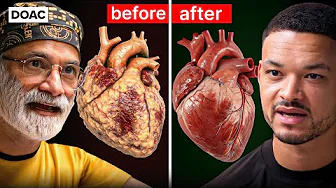
Insulin Doctor: The Fastest Way To Burn Dangerous Visceral Fat! I'm Finding Mould In My Patients!
 418.4K views
If you have a belly, sticking out, you. have a problem. Because the fat that's. in the stomach, that's called visceral. fat. This is very detrimental fat. And. that's the epidemic that we have today. But the only thing that will make you. lose that fat very quickly is Dr. Pradeep Jamnadas is a world-leading. cardiologist who has treated more than a. quarter of a million patients with. chronic heart disease. Now, he's using. his voice to help millions more prevent. ending up on the operating table through. simple lifestyle techniques. >> This is crucial. Glucose actually stops.
sticking inside the bloodstream. And the. body pours insulin into the bloodstream. to push glucose out. But frequent. consumption of carbs, sugar, processed. foods is causing insulin to stay up, which can lead to insulin resistance. And you're going to be more prone to. heart disease, which is the number one. cause of death all over the world right. now. But this is where fasting comes in. Because after 12 hours, you start. pulling the fat out. And the first place. the fat comes out of is going to be. visceral fat. But with modern living, we. have lost this physiology of fasting. So.
we'll go into that. >> And there must be certain things which. people aren't aware aren't healthy as it. relates to my cardiovascular health. >> Yes. So I see that people who overly do. aerobic activity, they end up with more. coronary artery disease than patients. who do short sprints and resistance. exercises. Then there's mold. And almost. 70% of homes these days have some form. of mold toxicity in them. But also, one. night of bad sleep, you become insulin. resistant the next day. And there's. calcium supplements, excessive fruit,
white rice. >> White rice? You'd be surprised how much. arsenic there is in rice these days. I. watch a lot of true crime. People kill. each other with arsenic. >> Yes. And it will slowly kill you. And. lastly, this is going to surprise you. I see messages all the time in the. comment section that some of you didn't. realize you didn't subscribe. So if you. could do me a favor and double-check if. you're a subscriber to this channel, that would be tremendously appreciated. It's the simple, it's the free thing. that anybody that watches this show. frequently can do to help us here to. keep everything going in this show in. the trajectory it's on. So, please do.
double check if you subscribed and thank. you so much because in a strange way you. are you're part of our history and. you're on this journey with us and I. appreciate you for that. So, yeah, thank. you. Dr. Pradeep Jamnadas, what is it you've spent the entirety of. your career, especially the last few decades of your. career, focusing on? Prevention of heart disease, which is the number one cause of death. all over the world right now.
You see, the heart is made up of many. parts. So, this is important. It's a. pump, so it's a muscle. So, you have diseases of the muscle and. it's rampant these days, cardiomyopathy, weakness of the muscle. Then you have. the arteries on top of the heart and. that's called coronary artery disease, diseases of the arteries, they block up. Then you have the valves, the valves. tend to get damaged as well. For. example, aortic stenosis. And then you have the peripheral. circulation, all the blood vessels that. go to your carotids, your brain, your.
legs, and to all the organs of your. body. And then you have microvascular. disease, which is the tiny capillaries, that they become dysfunctional as well. >> What's a capillary? Capillary is the. branch of the branch of the branch. >> Okay, so like the tiny little veins. >> Tiny ones, yeah. So, when they become. dysfunctional, that organ becomes. dysfunctional as well. So, cardiology. affects all these aspects. And how long have you been operating on.
people's hearts? About 35 years now. And. how many hearts do you think you've. treated? In excess of 30,000. And what what's the age range of those. patients? They we used to be mostly older people, over 65. Now, I'd say 50% of them are. under 65 and 50% are over 65. So, the. demographics is changing. The younger. people are developing heart disease. So, the youngest patient you've ever. treated?
28. And what what was the predicament in. that case? He was having a full-blown. heart attack. So, that means that one of. his arteries was completely clogged up. It had a blood clot in it. There was no. circulation past that artery, and. therefore he was having acute chest. pain, sweating, blood pressure was low. He comes straight to the hospital. I. rushed to the hospital, take him. straight into the cath lab, and try to. open up that blockage. And we did open. up that blockage, and we put a stent in.
it, and got rid of that blockage. immediately to restore that blood flow. to the heart muscle. And at 28, how does one get a heart. attack? You said it was blocked up. There's a lot of nuance in that. Most people don't understand what a. heart attack is. So, in a nutshell, I'm. going to tell you what it is. When you have a plaque, a plaque is a. build-up of a little. fibrous material inside the artery, and that doesn't cause a heart attack. A. heart attack is caused when one of those.
plaques. cracks. Now, in this diagram, for. example, it's showing that the plaque is. closing up the artery, and this will. cause angina. That means a lack of blood. supply over here. So, this patient may. complain of chest discomfort, or he may. not complain of chest discomfort. Because remember, when you have a. blockage like this, only 20% of the. patients actually get chest pain. That means that you could have a. blockage like this in a patient, and he. may not have any chest discomfort.
And the only way you're going to pick. that up is by doing a stress test, or a. coronary calcium score, or some other. modality to see whether he has blockage. or not. A heart attack is when a minor. blockage, which is not causing much flow. disturbance, suddenly cracks. And what. happens to the the plaque that that. cracks off? And when it cracks open, the. blood that's going past it sees the. crack and wants to repair it. and forms a blood clot on it. So, the.
final thing that shuts down that artery. is a blood clot. It's not the plaque. that shuts it off. It's a blood clot. So, a heart attack is caused by a blood. clot at the site of a rupture. And what. causes rupture is inflammation. Okay. So, when people say that heart disease. is the number one. killer of people generally that are that. are diseased, is it that process that's. causing it alone or is there a multitude.
of processes that lead to heart disease? There's a multitude of things that lead. to heart disease. Look, they are That was a heart attack. That's right. Okay. So, one, you're making plaque. You shouldn't. be making plaque. A plaque is an inflammatory. area inside your arteries. It's reacting. to something. And I can go into the. nuance of what's actually What's the. body reacting to? What's inflammation? Inflammation is reacting to something. What is that something? And I think it's.
important for your audience and. everybody to know what that something. is. Now, you've got this pimple. Think of it as a pimple on the inside of. the artery. Now, one day when there's enough. inflammation in your body systemically, that pimple is going to crack open, just. like a pimple on the skin breaks open. Now, that artery has this little pimple. on the inside and it cracks open and a. blood clot forms on it, and that's a. heart attack. So, you don't want plaque. formation. You don't want plaque.
instability, which is rupture of that. plaque, and you don't want a blood clot. to form on it. There are factors that. affect each of these processes, and all. three processes are going wrong today. And that's why we have so much plaque. formation and instability of the plaque, which then leads, of course, to heart. attacks. And our blood, in general, we have more. coagulation issues today than we ever. did before, which means our blood, because of inflammation, is more ready.
to clot more easily. So, we having the. perfect triad. It's a perfect storm. That's why we're. seeing an epidemic of this, and that's. why we're not making a dent in it. Yes, you can have a plaque rupture and have a. heart attack and we'll put a stent in. you. Okay, that's fine. But what did we. do. to look at the underlying reason as to. why you formed that plaque, and why did. you rupture it, and why was your blood. so clotty in the first place that made. you actually seal off the artery?
Is this an increasing problem? Yes, it's a it's a huge problem, because. those factors have been identified now. And that's what we go for in my. practice. We look for the factors. Why. did you make this plaque? Why is there so much inflammation in. your body? Inflammation is a reaction to something. foreign. What is that foreign stuff? What is that abnormal physiology in you. that your body is reacting against? Because that's what inflammation is. And inflammation, of course, whenever.
there's going to be inflammation, there's going to be increased tendency. to make blood clots. So, we go in, we. chase all these things in patients to. find out. And that's the real. prevention. That 28-year-old that came in. um and you treated him, was it was that. a a surgery you did? We call it a. surgery, but it's not. It's a it's a. angioplasty. So, we go in from the wrist. Yeah. or we go in from the groin with a. catheter, and we go into the coronary.
artery. A catheter being like a tube. >> It's a hollow tube, and we put it into. the coronary artery. We shoot the dye. inside, we see where the blockage is, and then we thread a tiny wire. into that artery through the blockage, and then bring in a balloon, and squash. the blood clot out of the way, restore. the circulation, and then bring in a stent. A stent is. like a spring that opens the artery up. We leave the stent inside there, we. remove everything else, and now you have.
an open artery, and you have blood flow. going down that artery. >> And what had that 28-year-old done to. end up in your surgery? What were the. decisions that they had made that. brought them there? So, he was number one, he was. overweight. But, he wasn't just. overweight. The overweight was all in. his belly. And he had a fatty liver, and he had. what is known as visceral fat. He was not a diabetic, but he was a. prediabetic. That means he had a lot of insulin in.
his body, and his glucose levels were. good. So, if you went to his family. doctor, they'd say, "Oh, you're not a. diabetic. Your hemoglobin A1C, which is. a blood test that you do for diabetes, is actually okay." But, actually that. patient had a very high insulin blood. level. Now, insulin. is a very atherogenic molecule. It. causes smooth muscle proliferation. Smooth muscle is in the walls of the. arteries. It causes vasoconstriction. It makes your blood more clotty,
and it causes inflammation. So, this patient was a prediabetic. And this is very important. This is what. caught my attention. Because when I looked at my patients. that were coming in with heart attacks. and hardening of the arteries, and when. I tried to identify why they're doing. this, none of them were diabetics. But, then I did a glucose tolerance test. on them. And what happened, it was just by chance. that I happened to have these tests in. my office where you can measure the.
blood glucose. So, I had about 120 of. them. So, I said, "Look, let's just do. some random testing on these patients.". And I found that at least half of them. had no diabetes, but they glucose. intolerance. That means that their. sugars went up, but not enough to make. them a diabetic. But, it did go above. the normal range. We did not have. insulin testing at that time. About 10 years later, we started testing. insulin in the office, and I bought a. machine for this purpose.
in my office to measure insulin levels. And life was never the same again. Why? Because it's all about insulin when it. comes to the metabolic derangement. So, I found that these patients, their. sugars were going up 250, 160 after. giving them a glucose drink. Mhm. So, you say, "Okay, he's not a diabetic. Look, the sugar. didn't really go high." But, when you. measure the insulin level, the insulin was off the roof. So, when. you say this is an insulin problem, can. you explain this to me like I have no.
idea what glucose and insulin are for. for any of my listeners out there that. have a inexperienced understanding of. these these these terms and what they. what they do and mean? It's crucial. Everybody needs to understand the. relationship between sugar, which is. glucose, and insulin. When you consume sugar or. glucose, the body has to get rid of that. glucose very quickly from the. bloodstream because glucose actually is. toxic inside the bloodstream. Even. though it is what the body uses for.
energy, in the bloodstream, it glycates all the. blood vessels and the walls and the. components in blood and the hemoglobin. as well. Glycates it. That means the. glucose attaches itself to that. molecule. So, now that molecule can't work. properly. That is why the higher your. blood glucose, all your chemicals don't work well. Your. enzymes don't work well. Your hormones. don't work well. Nothing works well, and. you age prematurely because you're. getting glycation. Glyca- A glycated.
molecule can't work normally. It doesn't. function normally. So, when you consume the glucose, the. glucose has to come out of the. bloodstream. And how does the body do. it? It sends a message to the pancreas. The. pancreas says, "Aha, I'll make some. insulin." It pours insulin into the. bloodstream. Insulin comes into the. bloodstream, pushes the glucose into the. cells. And where does it push in it? Into the liver, into the muscles, into. every cell in the body. Insulin will.
push glucose out. Now, how much insulin. is the question. If I'm eating every 3 hours, and I'm consuming glucose, or I'm. consuming starchy foods, or I'm. consuming carbohydrates. Now, watch. where I'm going with this because you're. already beginning to know where I'm. going with this. I'm consuming glucose and carbs every 2. 3 hours. I'm stimulating my pancreas. I'm stimulating my insulin. My insulin. goes up, it comes down. But before it. even gets a chance to come down, it goes.
up again. So, the repeated consumption of and. frequent consumption of glucose is. causing my insulin to stay up because. insulin stays a little bit longer in the. bloodstream than the glucose. The. glucose will come down in about 2 to 3. hours, but the insulin stays higher for. about 4 hours. Now, what happens is that. you continue this lifestyle for a few. years. Now, the body, because these are all. hormones, will say, "Well, you know, it's I'm.
going to need to make more insulin.". Now, you become insulin resistant. Any. hormone that stays in your body for a. long time, the body becomes immune to. it. So, the next time I eat the sugar, I'm. going to have to make more insulin to. produce the same effect. That is called insulin resistance. So, now you got this patient who's been. eating carbs, sugar, processed foods. What does that mean, processed food? That means foods that are quickly.
absorbed into the bloodstream. Processed. foods. These are products. without fiber. So, the absorption is very quick. So, the poor pancreas has to react just like. that. Produces a whole bunch of insulin. And then the frequent eating and the. frequent consumption makes you insulin. resistant. So, now you produce a whole. bunch of insulin in order to bring that. sugar level down. So, then you say, "Okay, well, it doesn't matter because. the insulin the insulin is bringing the. sugar level down. So, what's the harm.
done?" Because your A1C is still good. You're not diabetic. No, but it's that. background high insulin that is. destroying your metabolism. It's that high insulin level in the. background. So, insulin. pushes glucose. into the liver and you develop a fatty. liver. It pushes the calories into production. of new fats around your viscera. The. viscera means in your belly. Around your pancreas. You get visceral fat. Now, this fat is.
produced from glucose. It's a different. kind of fat. Look, if I gave you a high. calorie diet right now of all sorts of. foods, you'd put on weight everywhere, okay? But, if I give you glucose, you put it. on mostly in your stomach. And your. stomach will protrude. And that's called. visceral fat. It's on the inside. You. can't pinch it. It's on the inside. >> Around your organs. Around the organs. This. is very detrimental fat. And that's the. epidemic that we have today. And that's.
a direct result of eating, you know, starchy glucose carbohydrates, which. creates insulin, which creates this. downstream effect on. >> Wrong foods and eating too frequently. Too frequently, okay. Because remember, it's also the frequency of eating. Because before that insulin level gets a. chance to down, you're already popping. yourself with more food. And hence you. develop insulin resistance. You get a. very high insulin. It takes this much. insulin now just to bring that sugar. level down. And then the one day. when you cannot control that sugar, now.
that sugar will go out and now your. doctor will say you're a diabetic. But. by that time, you've already had 10. years of hyperinsulinemia. So, what happens if by the time you make. a diagnosis of diabetes to say Well, now. your sugar is really high. It is high. because your body has not had the. ability to keep it down. Why? Because. even that high insulin could not keep. your sugar level down. You became a. diabetic. You lost that whole. opportunity of prevention. It's those 10.
years. Look, by the time you're a. diabetic and you come and see Dr. J in. his cardiac clinic, you already have. coronary artery disease. Like that. 28-year-old. The 28-year-old didn't have. diabetes. He already has coronary artery. disease. By the time you are diagnosed as having. diabetes, you already have coronary. artery disease. We have a great. opportunity here to actually start. screening these patients with insulin. levels very early on. But most doctors. don't have the ability or knowledge to. do the insulin level testing.
But it should be done. And someone like me, I'm 33 years old. now. When does the damage begin? It starts right now. It starts right now. As soon as you. around 30, you're already starting to. have trouble. You have to But you know, this is what I do. I look at that. patient walking into my room. And if I see that he's got a belly. sticking out, I already know he's probably got insulin. resistance.
Because all the fat is in here. Because the fat that's in the stomach, sideways he looks terrible, from the. back he looks great. His waist is. increased. Mhm. Mhm. He doesn't have all. the fat everywhere else in his body. That's the phenotype of somebody who has. hyperinsulinemia. That same person goes on a cruise, he'll. come back 5 to 10 lb more because he's. got so much insulin in his body. Insulin. is a storage molecule. Puts everything. away.
And it's very hard for him to lose. weight. Why is it harder? You The only. thing that will make you lose that fat. very quickly is to change your diet, of. course, but you have to do fasting. Because fasting brings your insulin. level See, this is where fasting comes. in. So, what does fasting do? Do you mean. fasting or a calorie deficit? Is it Or. is it the same thing in your view? >> No, they're not the same thing. They are not the same thing. You see, when you don't eat, your. insulin levels come down because you're. not stimulating your pancreas anymore.
So, you want to bring your insulin. levels down. The best thing you can do. in the world is to do fasting. Because there's no Look, if I just. simply cut down on my calories, then there's a different physiology. that's going to take place in the body. And when you fast, there's a totally. different physiology. When you cut down. on calories, the body senses that. there's caloric deficit. Your metabolic. rate changes. It actually slows down. And the body will start breaking down.
everything, muscles included. So, you. lose fat and you also lose muscles. On the other hand, when you're fasting, it's a different physiology. Fasting is I've put on fat, now I'm. going to take it out of the bank. Now, the bank is going to be available for me. to pull out my calories and use it now, and you start burning the fat. So, in. the first 12 hours of a fast, you take. out all the glucose in the form of. glycogen from your muscles and your. liver. After 12 hours, you start pulling the.
fat out. And the first place the fat. comes out of is going going visceral. fat. That is why fasting benefits you so. much cuz it gets rid of that worst fat, the fat that is very inflammatory. You. see, if I did a biopsy of your visceral. fat. versus a biopsy of, let's say, a fat. from on your buttock, Mhm. two different. types of fat. One is full of. inflammatory molecules, the other one is not full of. inflammatory molecules. One is producing interleukin 6 and tumor.
necrosis factor, and this other fat is not. These are two. different fat storages. Visceral fat is very toxic. It's very. inflammatory. And that is why patients who have. visceral fat make all these molecules. So, when I do the blood test, I see. that, "Oh, you've got so much. inflammation. You've got interleukin 6. is high, tumor necrosis factor is high, your CRP is running high." And one of. the reasons for this. is not just leaky gut and other things. that I look at, but in your case, it is.
also because you have a lot of ectopic. fat. Ectopic fat. Ectopic fat is now. we're realizing is not just only around. the liver and around your pancreas, it's. also around your heart. So, when we look at the coronary. arteries and we see all those fat around. the coronary arteries, we had a very. nice diagram right there, and you can. see that around each artery, there's that yellowness. That yellow is all plaque.
Fat. That's fat around that, and it's. plaque forming. It's plaque forming. It. stimulates plaque. It's inflammatory. And now we can do CT scans that will. actually detect how much inflammation is. in the fat around the arteries as well. Ectopic fat is in the. around the coronary arteries, it's in. your liver, and in your pancreas, and it. is very inflammatory. On this point of. fasting, so if you have someone come to.
you and they're, you know, they have. that physique where there's a bit more. of that protruding belly fat, you said. that fasting is a much better approach. than just sort of a calorie restriction. I was looking at some studies that said. research shows that calorie deficits of. any kind can reduce visceral fat, but. fasting will give it an edge because of. the insulin sensitivity stuff that you. talked about as well. What kind of fast. should one be doing? Because there's so. many different names for these fasts. People do these 40-day water fasts and. they do intermittent fasting. It's a. great question. There are many, many.
different types of fasting. Depending on your goal on. what do you want for that particular. patient? So, if a patient is just simply. looking to reduce his visceral fat, then. I start with 12 12, which means 12 hours. you don't eat anything, you just drink. liquids with no calories in it, and then. 12 hours is your feeding period. We. start with that. And we do that for about 2 to 3 weeks, then we quickly move to 18 6.
18 6 means 6 hours you get to eat. 18. hours it's only. water, black tea, black coffee, green. tea, no calories. 18 6. 18 6. And then. that's one type of fasting. Now, if a. patient is very overweight, a patient. has diabetes, and your goal is to. reverse the diabetes, the patient needs. to lose 60 lb, then those patients have.
a special type of need. For them, I will. take them to a 48-hour fast once a week. Sometimes I'll go to a 3-day water fast. every 9 days. Every 9 days you will do OMAD. OMAD. means one meal a day only every day for. 9 days. And then you're going to give me a 3-day. water fast. Is the same advice applicable to women? Because obviously they're contending. with.
a variety of hormone fluctuations and. estrogen and I know that the the the. female body responds differently to. these kinds of stresses like fasts. I've been asked that question so many. times from patients as well. Most of the. women can actually handle it. The only women that cannot are those who. are trying to become pregnant or or they. have um. or they're already pregnant. I I think. that women are not that different when. it comes to the fasting programs. So in. my experience, I've been able to get.
women to fast. I just finished a fast on. one lady just now for a 72 days. 72. days. She was terribly overweight. She. had diabetes. She had hypertension. She. had hyperlipidemia. She was having hip replacements, knee. replacements, joint problems. She had. skin problems. And we fasted her for 72. days. What did she have in those 72 days. in terms of drinks, electrolytes, coffee? What was she Great question. So. she would have black tea, black coffee,
water. And in the water once a day, I tell her. to put some electrolytes in there. So. there's an electrolyte called Element T. or sometimes I just tell them to go buy. some Celtic salt and put half a teaspoon. in there. And once a day you take that. If you get cravings. and you feel really really hungry, take some MCT oil, a teaspoon, and put. it in your water and you can drink that. as well. I think it's worth saying that. probably shouldn't try this at home,
ladies and gentlemen, because obviously. medical supervision is critical here. But in the case of that lady, what was. the before and after of that 72-day. fast? So. diabetes gone. Blood pressure. normalized. Weight loss, tremendous weight loss. I. mean, I think she lost about 55 60 lb. Wow. Okay. And not only did she lose all. that weight, yes, all that weight from. her belly was gone, but even her face, under the arms. So, when you lose weight.
in a fasting program, it's very. different from losing weight when you. are restricting calories. You actually. retract your. your skin. So, you get real changes in. your entire body. These people I had one. patient that fasted for 183 days. under supervision. Okay. So, he went from 400 lb to 210 lb. And when he walked into the office, you. would not recognize that he's just lost. all this weight because he did not look.
like skin on top of the bones and then. having to have surgery to remove all. that excess skin. Fasting is a totally different. physiology. In fasting, you you you you you the body. is doing a whole lot of things that are. very different and we can go into the. physiology of fasting because that's. fascinating. It's a physiology that has. not been used by us. We've lost it. So, one of the things about modern living, modern living, we have lost this.
physiology of fasting. First of all, why. do we still have that physiology in us? It's because it's supposed to serve a. purpose. because we're supposed to be fasting and. feasting. But now we're only feasting all the time. and we're not fasting. In order to go back to normal, you should be fasting. Fasting is. supposed to be a normal part of your. existence. That's the way you were. designed, not this modern industrialized. living that we've been doing in the last.
fraction of a millisecond in the total. existence of the human race. We've changed our lifestyles so much, modern man has, but our genetics and our. physiology has lagged behind. We are. supposed to use fasting and feasting as. part of our normal program, as our. normal physiology. That's why we still. have it. That is why after 12 hours, you. start making some more ketones in your. body. And the ketones come from fat.
You're moving that fat out of storage. >> What is a ketone? Ah, ketones. So, ketones are a energy. molecule produced by the liver. How does. it make it? It makes it from fat. So, the fat gets liberalized and by the way, the fats only start moving when your. insulin levels are down. So, because of. fasting, your insulin levels are really. low now, okay? Because you've been. fasting, right? So, now the fats start. dissolving. So, you get free fatty. acids. The free fatty acids float into. the bloodstream. Free fatty acids are. fat products. They float into the.
bloodstream. They go to your liver. Your. liver converts those into ketones. Now, ketones are an energy source of the. body. An alternative source to glucose. So, in. general terms, you are either going to. be running on glucose and glucose. metabolism. or you're running on ketones. Okay? And so, ketones basically show up. in the when glucose isn't around. That's. absolutely right. So, ketones and. ketones are actually a cleaner fuel for. the body.
And in terms of producing reactive. oxygen species in the metabolism, the. way your mitochondria work, you actually. produce less reactive oxygen species, which is damaging to your physiology, when you're in ketones. And ketones are. signaling molecules that also change. your physiology in a number of ways. Number one, it causes the production of. brain-derived neurotrophic factor. That occurs under ketogenesis. Brain-derived neurotrophic factor, which.
means that you become smarter. You're growing new cells. Your reflexes. are better. Your visual acuity is. better. Why? Because nature wants you to. become a better specimen so you can go. out and get your next kill. So, why. don't we all just stay in a state of. ketosis then if it's so miraculous? Well, that's a great question. You don't want to be in ketosis all the. time cuz that's not what ketosis what. what our physiology was made for because. then you'll just be burning fats, burning fats, burning fats all the time. and that's not a good state to be in.
constantly either. So, you want to be. able to do both. You're supposed to get. your current account and your deposit. account. You're supposed to go work with. both of them. That's the normal. physiology. So, not only brain derived. neurotrophic factor increases, but also. stem cells. Stem cells are amazing. And in my patients, of course, I see. that What What is a stem cell? Ah, stem. cells. So, stem cells are We all have.
stem cells. And we all still make stem cells. And they're produced by the bone marrow. These are pluripotent cells. Cells made. that will then go out and become. whatever they need to become. So, they can go out into your. circulation, become a muscle cell, they. can become a retinal cell, a skin cell. They can transform into anything. So, what happens then when you break your. fast? Mhm. You get a surge of stem cells coming out. of your bone marrow. Some of them become. immunocytes. That is why we know that.
fasting also boosts your immunity. People who fast get less infections, get. less sore throats and coughs and colds. and the viruses that are going around. The immunity is better. The stem cells. are not I'm particularly interested in. the stem cells because of a thing called. the progenitor cells, endothelial. progenitor cells. Progenitor cells are. You see, you're always hurting your. blood vessels, the lining of the blood. vessels and the lining of your blood. vessels have to be constantly repaired.
and they. they are repaired by the progenitor. cells. When you do intermittent fasting. and time restricted feeding, you will produce more, and this has been. shown in numerous studies, more. progenitor cells. And these progenitor. cells go and repair your blood vessels. So, I would do what Why am I interested. in this? Because I'm a vascular doctor. I want my blood vessels to constantly be. repairing themselves from the damage. that we do in day-to-day life. So, stem.
cell mobilization, brain-derived. neurotrophic factor, growth hormone. You make more growth. hormone in fasting. So, when should you exercise when you're. fasting? At the peak of your fast. So, if I'm. going to break my fast at 6:00 p.m., I tell patients to go out to the gym at. 4:00 in the afternoon. But they say, "But doc, how can I do. that?". You will find that you will put on more. muscle, and you will retain more muscle. as well, cuz you have higher growth.
hormone. The fastest way and the best. way to actually increase your growth. hormone production is to do intermittent. fasting. When I start with um Dr. Stacy. Sims, who does a lot a lot of um. work on women's physiology and women's. performance, one of the things she said. to me is that if a woman in particular. tries to do a workout fasted, the body. will break down the muscle. in a woman because she said a woman's. body is much more the hip- hypothalamus.
is much more sensitive to changes in a. woman's glucose levels cuz it's trying. to defend against, you know, pregnancy. and you know, all these kinds of things. So, it shuts down the menstrual cycle if. there's not enough glucose in the blood. And. and so, she said for women in. particular, you do you do want to have. eat something before you work out or it. will. your body will. take from the muscle. And it will. definitely won't The body is very. sensitive. It won't want to to help you. build muscle if there's not enough. glucose energy in the body. She said for. men, it's slightly different because. we're a little bit more robust, and we. were meant to hunt. So, if we were.
fasted, our body is, you know, designed. to. kind of keep up its normal processes to. help us complete a hunt, per se. So, I. guess I throw this question out to you. about about women, exercise, and. fasting. >> Yeah. I I think that's a great. observation. So, again, it's what kind. of exercise is the woman doing? You see? Now, there's two kinds of basic. exercises. One is aerobic activity, and one is uh resistance exercises. And. you can also throw into that. high-intensity interval training. Mhm.
So, when it comes to the training that I'm. talking about in a fasting state, I like. resistance training. So, in resistance training, that glucose. issue is not going to become a problem. Now, if you're going to put that female. patient on a treadmill and make her run. for a long period of time, let's say. you're going to make her run for 40. minutes on the treadmill, I think that. yes, you are absolutely right. You are. going to deplete her glucose, and you. may cause some problems, and then the. muscle will start breaking down. But I. do believe, from all the experience that. I've had with my patients, that when I. tell them to do a hit, which is.
high-intensity. interval training, all the women do just as well as the. men. Because all you're doing is you're. intensely working the muscles, and. you're doing some resistance exercise, and then you're totally resting as well. And I see fantastic results with that. In terms of ketosis, do you. cycle in and out of a ketogenic diet? And just for anyone that doesn't know. what know a ketogenic diet is a diet. that's very, very low in carbohydrates. So, less than 50 g of carbohydrates a day, typically. Do you cycle in and out of that diet?
Yes. Yes, you have to. Because I don't want. them to stay in a ketogenic state all. the time. So, I do. I do. I do. I tell. them, "Look Look, what is your goal. here? What is your goal? If your goal is. that, okay, I need to lose 70 lb, then. you're going to do this till you get to. your goal. Once you get to your goal, then you're going to go back to. time-restricted feeding, which means. 18:6. So, you'll still make some. ketones, and then intermittently, you. can still do a 36-hour fast.
That means. normal healthy people, you and me, we. should still be doing one 36-hour fast. at least once a month. So, we'll go to. that. We'll go to that. Fasting must still become part of your. pro- But, you don't need to stay in. ketogenesis all the time. Remember also that when you are in. ketogenesis, you are. you are also in autophagy. How much autophagy can you do? That. means you're recycling all your your. particle all your organelles inside your.
cells. What does that mean in simple. terms for someone that doesn't know the. term autophagy? >> So, bottom line is the cell senses. that. there is no new parts coming in here. So, it takes the redundant. organelles inside the cells. and breaks them down. Packages them up into these little. packets and exports them out of the. cells. So, these cells, all your cells.
in the body, now are functioning at a. much more efficient level. So, mitochondria. also have autophagy. So, you're getting. new mitochondria, you're repairing your. mitochondria, and you know it's all. about mitochondria, right? Your energy. Mitochondria are those organs. organelles inside each cell. And we just think of them as only an. energy source. That only are my. mitochondria, they make ATP. That's not the whole story.
Yes, they produce ATP. But, they also produce this thing called. reactive oxygen species. And thereby, they influence. the metabolism of your of your cell as. well. They send signals. They send. signals to your to your chromosomes. So, you start producing new proteins. You. start producing. molecules. So, your mitochondria are. very important. If you have old. mitochondria, you're going to have. fatigue, tiredness. But, when you get.
mitophagy, one reason why you feel so. good after a fast, because you have new. mitochondria. They are much more. efficient in producing ATP and less. reactive oxygen species. So, you have. mitophagy, recycling of your parts, cellular. function improves. Toxins get out of your cells as well. Toxins. Do you think there's a. preferable or a best exercise for heart. health? Like, if you were going to say, "Steven, to make, you know, my my I.
think my family has a history of. heart-related issues. One of my my uncle. died from a heart attack. So, I'm very. aware of. my own susceptibility to heart-related. illnesses. I think there's other people. in my family um that have heart-related. issues, as well. Is there a particular exercise that is. best for the heart? Cuz I'm guessing. resistance training, i.e. training, might not be the. the number one recommendation for good. heart health. You mentioned hit. I'm wondering if. that's.
Yes. So, I'm just going to tell you, broadly. speaking, what I see in my practice. I see that people who do a overly do a. aerobic activity, that means they cycle. 100 miles a day, or they're running on. the treadmill for 2 hours at a time. every day, or they're doing a lot a lot. of marathon training all the time, they. actually end up with more inflammation. in the body, and they end up with more. coronary artery disease than patients. who do short sprints, and patients who. do resistance exercises, and patients.
who do hits. So, in terms of cardiology, you Look, you. need some aerobic training. Why? Because. you want to develop some endurance, right? You don't want to be running. behind the bus and and get short of. breath just, you know, a few hundred. feet. So, for some endurance you do. aerobic activity. How much aerobic. activity, which is running on the. treadmill, for example, or just. sprinting? Only about 15 to 20 minutes. That's it. So, I tell patients, you want to run on.
that treadmill, you want to bicycle, 15. to 20 minutes. And then you got to go. into resistance exercises. The. resistance exercises that I have seen. work best in my patients is simple. things. You don't have to go crazy. You. do floor exercises. You use your own. body weight. as resistance. So, you can do the planks. and leg lifts and all these other. exercises. And you can do hit. But they. have to be very specific. So, you. exercise really hard for about 30. seconds to 45 seconds and then you.
completely rest for another 30 to 45. seconds. Okay. And that's allowing your body. to clean up the reactive oxygen species. you just created through that exercise. Because your rate limiting step in. cleaning up the metabolic mess that you. get when you get too much exercise. It's. a rate limiting step. Your glutathione. production, your superoxide dismutase. production. These are chemicals that clean up the. metabolic mess that you get when you get.
too much activity. That's a rate. limiting step. So, when you rest, you exercise and you. rest, you exercise, you rest, you are. going to get a cleaner physiology. With your patients, how many patients do. you think you've treated or worked with. in your career? Ooh. That's a. >> to guess into the nearest thousand in. your. >> have to be at least. nothing less than. nothing less than quarter million. How. do you deal with the heartbreak? That's.
no pun intended, but I'm saying like how. do you deal with the heartbreak of. watching people's lives. either them losing their life or their. their lives being changed permanently. forever or dealing with the families of. of people who lose their husband or wife. or or son or daughter. It it is very difficult. Especially when. we've been trying everything and still. things can go wrong. Based on that, I realized that sometimes. you can do everything to try to extend.
life, but you cannot life is still. finite. We will pass, yes, but we want. better health span and we want a longer. life span. I want to give the patients a. better quality of life also. I can't. make you live forever. I will see people die. Sometimes they. die in front of me while I'm even. holding their hands. They'll pass away. in the hospital right there. But what I do want to do. is to give them a quality of life until.
then that's going to change. And in all. this education, it's all so that you can live an optimal. life. and then pass away just like that. Have. you seen many people that made all the. right decisions? They were healthy, they. had a good diet, they were doing. exercise, and they still end up. passing away on your hospital table. because of heart-related illnesses? Yes. Can you give me give me one such. example?
Typical example, a fellow in the 60s. His coronary calcium score was over. 1,000. So, you know that's a CT scan. that we do. and it looks at calcium on the arteries. of the of the wall. So, all this plaque. that you you you you you showed the the. this yellow stuff here, all that has. calcium in it. So, the more calcium you. have, the more plaque you have. So, he had a calcium score of over. 1,000. So, sit down and talk with him and say, "Okay, so tell me, why do you have all. this calcium? No diabetes, no high blood.
pressure. Doc, I don't even drink. I. don't do anything. I don't smoke. I. exercise regularly. I go to the gym. And. then the question is, why do you have. all this coronary calcium in your. coronary arteries now? And. it turned out that ever since he was a. kid, he had a bad microbiome. And in him I found that that was the. reason why he got it. So he was shocked. When he left the office, he was totally. shocked cuz he thought that being.
constipated and having a bowel movement. every 3 or 4 days. is just normal cuz it was always like. that for him. Until I dug into it and found out that. he's actually got a lot of GI problems. And that's what probably caused him to. have inflammation. And that's what's. probably caused him to have coronary. artery disease. That's why he's got all. this coronary calcification. Yeah. So let's talk about the gut. microbiome then. You you mentioned earlier that that's.
really pertinent in. cardiovascular issues. Can you explain. to me exactly why and how that happens? The biggest difference between you and. your outer environment is actually your. gut. Not outside your skin. It's actually the gut. There's a hundred. trillion bacteria sitting in there. And. there's probably 400 trillion viruses. sitting in your gut. And they're not just hitching a ride for. you. They are there doing something. There's a symbiotic relationship between.
the gut. and you. They produce micronutrients. which get absorbed into your. bloodstream. If the right microbiome is. not present, you are being deprived of. those micronutrients. For example, short-chain fatty acids which are a. special kind of uh thing. But also, they. maintain the integrity of the lining of. the intestines. If the lining of the intestines is. breached, then bacterial wall products get into. the bloodstream. And the first place.
they'll get to is the liver. Hence, you get a fatty liver. There are basically three reasons for. fatty liver. Either you're drinking too. much alcohol, or you get a leaky gut, or you have too much insulin, cuz. insulin causes the conversion of glucose. into fat, right? So, you get a fatty. liver. When you say leaky gut, So, that's a leaky gut. >> Ah, okay. So, leaky gut is when. the microbiome is dysfunctional. The. microbiome that is dysfunctional causes. the integrity of your intestinal lining.
to be compromised. >> Ah, okay. >> Yeah. So, now molecules that are. supposed to stay in the gut, dead bacterial wall products, they're. called lipopolysaccharides, they're supposed to stay in the gut, but. now they get into the bloodstream, they. go up the portal vein, and up the portal vein, they'll end up. going straight to the liver. And when they end up in the liver, they. cause that fatty liver. Now, you get. this big fatty liver, which causes a lot.
of inflammation. A fatty liver. is an epidemic of this going on today. At least 25% of the population now have. a fatty liver. And what is upstream from. that? Is it Is it alcohol and all these. processed foods and things like that? It's basically processed foods, sugar, and leaky gut. And of course, toxins, alcohol being the biggest toxin. Okay. This is the seat of metabolism. So, as a cardiologist, I became. interested in this because I found that.
if you have a fatty liver, you're going. to be more prone to inflammation, and you're going to be more prone to. coronary artery disease. When we fix the. fatty liver, we change the diet through. fatty by by changing your diet, and now. you start eating real food and not. processed foods and products, when we. increase the fiber intake so that the. good bacteria start coming back into. your gut, mhm? And when I give you. certain supplements to restore all your.
nutrition in your body, then all of a. sudden the progression of coronary. calcium flatlines out. You see, let's. say you came to me for test and I did a. coronary calcium score and it's 500. And 2 years from now it's 800. That means, wait a second, something's. not right here, right? Your coronary. calcium should not be going up. Now, I can't get rid of the coronary. calcium because that's plaque in the. walls of your arteries, but it shouldn't. keep going up because one day it's going. to be 2,000. So, how do I follow how.
well my treatment for you is is I follow. the coronary calcium score. And again, the coronary calcium score is a marker. of the amount of plaques Correct. around. the heart and in the vessels of the. blood. Yeah, in the wall. >> Okay, so you want low. coronary calcium. Like my calcium score. is zero. You shouldn't have any coronary. calcium in the walls of the arteries. So, we have the yardsticks now We should. probably We should probably. differentiate between calcium.
supplements and the calcium that you're. talking about. So pertinent. Calcium. supplements actually increase the risk. of cardiovascular events. Calcium. supplements should not be taken. The. problem is not calcium supplements. The. problem is lack of D3 and lack of K2. So, we shouldn't be taking calcium. supplements. >> Absolutely not. Absolutely. I stop all. calcium supplements on all my cardiac. patients. And I tell them, you should take vitamin. D3 so you'll absorb calcium better into.
your gut and you take vitamin K2 because. vitamin K2 is going to make sure that. you don't get the calcium build up in. the wrong places, in your vasculature. for example. Just to give some context. on the research. Some Some large. observational studies suggest that. high-dose calcium supplements, which is especially, um, above 1,000 mg. a day from pills, may increase the risk. of heart attack and stroke, while others. find no clear link. Yeah. Okay. Yeah, no. I Look, also they advise high.
calcium supplements in women to prevent. osteoporosis, for example, right? And. osteopenia. Now, I live in Florida, and. all these young women, they come to me. in their 30s, they all have osteopenia. And the question is that they've got. calcium supplements put inside the milk, in the orange juice has calcium in it, and they're taking calcium supplements, and why would they And they have. sunshine, and why would they have. osteopenia? And the reason is D3. You need D3 and K2. That's what you. need. It's a hormonal thing. It's not.
the elemental thing. So, when people are on blood thinners, do they typically have low vitamin K1? If you're taking Coumadin, Coumadin is a. type of blood thinner Yeah. that lowers. your your vitamin K1 levels. And it will. also lower K2. So, Coumadin will lower. K2 as well. So, you will get increased coronary. calcification, and that's been. documented. So, patients who have. who are taking Warfarin, for example, or.
Coumadin, have been shown to have. increased coronary calcification because. of the fact that the K2 levels come down. as well as the K1 levels. Both come. down. Both So, you need vitamin K2. And. do you just do supplement that, or would. you get it from dietary? I supplement it. on all my patients because diet comes. from fermented foods. And we don't eat. enough fermented foods to contain enough. vitamin K2. One of the reasons why I do like my. supplements is because today's food is.
not as rich. as it was in the past. So, we're not eating the variety of. foods, but also we're not getting enough. vitamin K2 in our regular diet. So, if. you want to give me advice then on. having a great gut so that I don't end. up with leaky gut, which will cause all. of these downstream effects, what is. What is the advice you'd give me to have. a perfect gut? Number one, lots of fiber. Because the fiber is going to be eaten. by your bacteria, and you're going to. get a wide variety of good bacteria.
eating fiber. If you eat a lot of sugar, you will get bacteria, too, but they are. the bad ones, the ones that you don't. want. So, you're going to get a. condition called SIBO, for example. But you want to eat lots of fiber, so. because our diets today don't give us. enough fiber, I do advise all my patients to take. inulin with FOS. It's called inulin with. FOS. It's a powder, it's a soluble. fiber, and I just tell them to take one. scoop in your water every day, or put it.
in your whatever you're going to have, whatever liquid you're going to have. Number two, fermented foods. The fermented foods will give you not. only the bacteria themselves, because. they are For example, called kefir has. so many different strains of good. bacteria, but they also have the. postbiotics. What is a postbiotic? A postbiotic, for. example, vitamin K2. It's a product that. the bacteria make. Short-chain fatty acids. That's a.
product that the bacteria make. So, you. want bacteria, you want good bacteria in. your gut, and they will stabilize the. ratio of all the other bacteria in your. gut. So, the keystone species have to. come back into your gut. I was reading. some. research around fiber, and it says that in the United States, women are 40% fiber deficient, and men. are roughly 50% fiber deficient. And in. the UK,
we're about 40% fiber deficient. I don't think people know that. Where do. I find fiber? What What What do I need. to be eating to increase my fiber? Fiber is found in anything that's. non-processed. because the very act of a processed food. is to take out the fiber so that you can. increase the shelf life of it. So, any. processed food, anything that's. manufactured in a factory, for example, anything that already comes ready-made, they've taken the fiber right out of it. So, you got to eat real food. So, you're.
going to eat real vegetables. And that. too, a variety of vegetables. You see, you're supposed to eat 30 to 40. different types of vegetables a week and. we don't tend to do that. So, you want. fiber from a variety of sources. So, we. got to eat a little bit of all these. different different type of vegetables, including spices. They all count as one. vegetable. So, that's something I I. stressed to everybody that you got to. have variety. You got to have all these. different fibers because they will. foster the growth of different types of. bacterial species in your gut. What. about lifestyle recommendations for.
improving my gut? Things like, I don't. know, stress, uh sleep, exercise. Anything. >> Sleep is absolutely important. So, the. the the next thing is actually actually. sleep and stress because lack of sleep. causes a change in your gut microbiome. You got to sleep 7 hours a night. And. cutting down on sleep is going to affect. your entire physiology in your body and. your repair processes and your vagus. nerve and your delta sleep and but also.
your gut microbiome. One night you'll. get insulin resistance. One night of bad. sleep, you become insulin resistant the. next day. If you're changing. If you're changing time zones very. frequently, the. liver dysfunctions. and the gut microbiome also. dysfunctions. So, we got to be more cognizant of that. That lifestyle is very important. And we have to have plenty omega-3 in.
the diet. If you're starting a business, that. means you're one person doing the. workload of probably about 50 people. When I first founded this podcast, I had. no idea that I was about to step into. 100 different roles that I'd never. trained for. Things like researching and. production and scheduling and branding, all of it all at once. And this. experience isn't unique to me. But for. millions of founders around the world, the tool that changes all of that is our. sponsor, Shopify. Shopify now powers 10%.
of all US e-commerce, from names like. Gymshark and Mattel, to first-time. founders just getting started. It's like. having your very own design studio, content creator, and marketing team in. one, with hundreds of online store. templates, AI tools to create product. pages, and easy-to-launch email and. social media plugins. Behind the scenes, Shopify manages your inventory, international shipping, and even your. returns. So, if you're ready to sell, sign up for. your $1 a month trial at. shopify.com/bartlett.
That's shopify.com/bartlett. $1 a month. No way. You talked you talked earlier on about. toxins. Yeah. What do you mean by. toxins, and how what role is toxins. playing in my physiology, in my heart. health, in my gut health? Yeah. So, and what is a toxin? A toxin is a molecule. that should not be in your body. You. should not have been exposed to it. So, let's take a pesticide or a.
herbicide. These are chemicals. which man has made. and not perhaps adequately tested it in. in um. in rigorous studies, and yet these. chemicals get into the body. And we know. that many of them are estrogen receptor. disruptors, and that causes inflammation. as well. So, if you look at pesticides and. herbicides, we look at plastics, forever chemicals, for example, PFAS and.
other chemical BPA. These chemicals all disrupt our. metabolism in our body. And then, of course, mold is a toxin. And lastly, heavy metals are toxins. When the gut is not working properly, you're going to be more prone. to toxicity because the gut bacteria. normally grab a lot of those things and. take them out in your stools. So, when. we look at toxicity, we look at gut.
health and the liver health. The liver. is supposed to get rid of a lot of. toxins, but. in today's day and age, because of the. foods that we're eating, the environment. that we breathe, the environment that we. walk out into, we're getting too many. toxins and this poor organ here is. getting overwhelmed and cannot detoxify. adequately. So, when I do a blood test, urine sample, and a stool sample, I get. a very good bird's-eye view of what's. going on with their ability to detoxify.
and which levels are high. And I'm. finding. that many of my patients who have gut. issues and liver issues are very, very. high with not only heavy metals, but. they also have a lot of. pesticides, herbicides, and mold in the. body. And mold, I'm finding a lot of mold. And. mold and all these extraneous toxicities. cause inflammation. Inflammation is a. reaction to something that your body.
shouldn't have. Where is the mold coming. from? Mold is very interesting. I've only. started researching it in the last 1. year. Basically, almost 70% of homes these days have some. form of mold toxicity in them, either. from previous water damage or exposure. And mold is ubiquitous. It's It's just. about everywhere. And it can reinoculate. you every time you're in that. environment and it causes your innate.
immune system. to start reacting to it and causes. low-grade inflammation. in your body. And when I get rid of the mold, all of a. sudden I'm noticing that the patients. are not only feeling better but the rate. of progression of coronary artery. disease flattens off. I have this uh. steam room in one of my houses and uh I. went in there the other day and I. smelled I could smell it smelled a bit. funny. And I recognize that smell from when I. was younger as being mold. So I like I.
Googled it. I said what what is that. like earthy strong pungent smell in my. steam room? I think what's happened is. part of the like seat has come away from. the wall so it's not sealed anymore and. I think the moisture has got in there. with the water and I think it's moldy. and ChatGPT said to me when I was asking. ChatGPT, said it smell near the like. cracks. Yes. And if you smell it if it. smells really strong near the cracks. then that's mold and I smelled near the. crack and it was really really strong. I. remember thinking oh like so I had I not. known that would have been sitting in.
there 30 minutes a day inhaling all of. that strong mold smell. And from doing this show I've I've. learned that the downstream impacts that. can have on your body and your. cardiovascular health and everything in. between is really really bad. So I. I had a team come over and just uh fix. everything, repair it and do a deep. clean but I don't think people are very. aware of. how mold which is the kind of thing you. think of as like oh the the the bread. has gone green whatever can have a. chronic downstream impact.
>> And also this mold can come in and then. become part of your microbiome. So it. can actually come into your So let's say. you get out of this place. but if the mold is still in your gut or. if it's in your sinuses for example and. you get chronic sinusitis, you're. re-inoculating yourself over and over. again with this mold. And this is an. area of great interest and a lot of. research needs to be done. It is real. and we've known about it for a long. time, but the medical profession as a. general has not really taken this and.
run with it, but it is very important. And we certainly. looking at mold toxicity in our practice. because we find that it is actually more. prevalent than we ever ever imagined. before and we know the chemistry. We. know that it causes a a systemic. inflammatory reaction in the body and. it's reflected in the blood work. We see. that the CRP is up. We see that the. complement levels are high. We see that. the certain ratios of certain. inflammatory molecules are off. So, we. will do want to treat mold.
We want to treat sources of mold. toxicity both in the gut as well as in. the sinuses. And yes, people are. surprised when I tell them that that. affects the cardiovascular health. When. we talk about the clogging of arteries, why is it that healthy people still end. up sometimes with these clogged. arteries? I think it's because they have. sources of inflammation that we have not. identified. For example, we say, "Oh, you have no cholesterol, you have no. smoking, you have you you're exercising,
you're not overweight, you don't have. diabetes. Well, then I don't know why. you got all these odds." Well, there's. always if you dig deeper inside, there's. always something. And we'll find the. source of the inflammation. There's. always a reason why you get hardening of. the arteries. What's in that list? In. that list is mold. Mold, yeah. Leaky gut. Yeah. Huge. Food. sensitivities. Oh, let me tell you about. food sensitivities. So, another reason for the leaky gut. is that certain foods punch holes into.
your intestines in a in a in a sense and. causes a leaky gut. And I've had at. least one patient in the last 6 weeks. that I can remember. who. actually has celiac disease. And he didn't even realize he had celiac. disease because he had no constipation. diarrhea and he had premature coronary. artery disease and we identified that he. had celiac disease. We cut out all wheat. from his diet and that's going to stop. this inflammatory process from.
occurring. See, it's all about. inflammation. We need to get rid of. inflammation in order to get rid of. coronary artery disease. Any source of. inflammation. Get rid of the source. So, if the. pesticide levels are high, herbicide. levels are really high, get off. that source. Maybe you may maybe you're. living on a golf course and you smell. those chemicals every day. Maybe you. using it yourself in your yard. Maybe. you have toxicity coming from mold as. you mentioned, but we got to find the. source of it. So, a thorough evaluation.
of the gut microbiome, a thorough. evaluation. of toxins in your body and a nutritional. status. Your body is able to work and get rid of. this type of pathology if you have good. nutrition. We don't have good nutrition today. Let's talk about nutrition then. So, if. I wanted to end up on your surgical. table, if I if that was my goal, what would you recommend.
that I ate. and yeah, consumed? You should eat. nutrient. deficient. processed. foods. every day. Give me some examples of of things. Pringles and. Correct. So, it'll be things made out of. wheat, refined wheat, biscuits, cookies, cakes, lots of bread, basically.
fast foods, foods that come in a box, ready-made. food with labels, anything that comes in a packet that. you're open up. Including some of these. that are. high protein bars or some of these. because they have all sorts of other. chemicals in them. And I would have. lots and lots of um. artificial colorings in my food in all.
those processed foods. Um artificial sweeteners. lots and lots of diet drinks and sugary. drinks. Orange juice? Orange juice is is. on my list because that produces such a. profound increase in my glucose level. and then my insulin spike that I'm going. to get afterwards will cause me to. become very hungry 3 to 4 hours later. So, yeah. I would not eat real food. And you'll end up on my table. Also, alcohol, smoking.
>> Alcohol. No fiber because none of those foods. will have fiber in them. None of those. processed foods have fiber in them. Your. patients must. come to you at times and tell you what. they're doing. uh in terms of what they're eating and. lifestyle choices. And there must be. certain things which. very people aren't aware aren't healthy. You actually mentioned bread. Yeah. Is all bread bad? No, not all bread is. bad. Most bread is bad. I don't mind.
some sourdough because it's fermented. So, it's going to get rid of some of. those lectins that are already in the. flour. So, those lectins are gone out. because they've been fermented. So, it's. probably a little bit okay. But again, not large amounts of it, you know, a. slice once or twice a week is fine. But really, it's a survival food. Bread. is a survival food, just empty calories. That's all it's going to do. >> Is there like a worse bread? Is there. like one bread which is. Yeah, pure white bread, simple white. bread. The simple light white bread is.
pure calories, 70 calories right there. You're talking about just eat 10. teaspoons of sugar instead in one slice. I mean, it just doesn't make any sense. whatsoever. White rice? White rice. I. White rice is a staple food of many. people and they cannot live without it. So, I run into this problem all the. time. So, I tell them that this is what. you're going to do. You're going to. first and foremost soak your rice in. water and then discard the water after. an overnight soak because it contains. arsenic in it and other heavy metals.
You'd be surprised how much arsenic. there is in rice these days. You see? See the problem we have? Our. sourcing of our foods. I mean, here is a cardiologist has to. talk to his patients about how to cook. rice. What is arsenic for people that don't. know? It's a heavy metal that is found in the. soil and the water. It's in contaminated. soil and water and in this paddy fields. are now full of arsenic. It's a poison, isn't it? People I watch a lot of true. crime. People kill each other with. arsenic.
It's a very, very strong poison and. it'll slowly kill you. Is there anything else on that list of. thing misconceptions? Cuz. >> So, so, so the rice has to be soaked, then you'd get rid of the water, then. you cook it. with lots of water, throw away the rice. again. I mean, the I throw away the. water, not the rice. And then, you cool. the rice in the refrigerator. And then, you eat the rice the next day. by reheating it. Now, what you've done. is you've created resistant starch.
Now, what's going to happen is that that. rice is not going to have the same. insulin effect in your body and weight. gain effect and changes in your. metabolism because it's now got. resistant starch. Resistant starch means. that those. molecules have all bound to each other. They don't They resist absorption and. digestion until they get to your colon. And then, who's going to eat it? Your. bacteria. So, you're basically feeding. the bacteria with your rice. So, if. you're going to have rice, this is the. way you're going to do it. So. Is there. anything else on that list that.
people should be thinking about that. they probably consider to be healthy. right now. Yeah, yeah, yeah, yeah, yeah, yeah. So, it's also what you do to your. food. Look, you take a nice piece of. fish, for example, and if you burn it. and you blacken it really bad, you're creating what is known as. advanced glycation end products. You fry something, you're creating. advanced glycation end products. So, let. me define that for you. If nature does not have the ability on.
its own. to take. glucose, protein, and fat and combine them at. very high temperature. But you can do it in your air fryer. and you can do it outside in in in you. when you're blackening your food and. over blackening your food, it's called. advanced glycation end products. So, when you over burn your food, when you. overcook your food, you're creating. these molecules. Now, you're consuming. these molecules and they've been shown. to cause a radical increase in the.
inflammation in your body cuz your body. reacts to those products. There's. receptors to get rid of those, they're. called RAGEs, and they get rid of these. products, but you overwhelm them and now. you get inflammation. And is there any other watch out foods. that. you know, people think are healthy but. maybe if if I was trying to have an. optimally healthy heart, I should avoid? This is going to surprise you. Excess of fruit. Cuz I'm not a very big. follower of fruit. Fruit should be eaten.
only in season cuz it has too much. fructose in it. Fructose being the. sugars. Fructose is a sugar and fructose. causes fatty liver. So, our over consumption of fruit is. another factor. that is contributing to coronary artery. disease and diabetes and fatty liver. And we think of fruit as being a healthy. thing. You see? But fruit should only be. consumed really in the fall and in. season and in small amounts. Cuz that. high fructose level really causes major.
changes in your metabolism. So, I'm not too fond of fruit. You can. eat fruit in season, small amounts of. it. But, you know, people go crazy about. fruit. I mean, I had a patient who was having. mental problems, as well as. cardiovascular disease, and he That's. all he lived on, is fruit. Morning, lunch, and dinner. And the moment we. stopped that, his health changed. completely. He got so much better. So, excess of fruit is also no good. Excessively cooked foods, processed.
foods, refined products. And another. one, vegetable seed oils. So, any food that you prepare or you buy. that contains vegetable seed oils is a. no-no. Cuz vegetable seed oils are a product. And if you look at all of them, they're. exceedingly high in omega-6. And the. ratio of omega-6 to omega-3. is what the problem we have today. We have far too much omega-6, very.
little omega-3. So, anything that. contains vegetable seed oils So, I. always tell my patients, get rid of that. vegetable seed oil bottle from your. home. So, what oil should I use instead? The. oil at home, if you're going to use any. oil, is going to be olive oil, extra-virgin olive oil for your. for your salad. And if you're going to do high. temperature, put a small little pat of. butter. Or use a little bit of ghee. Or you can use a little bit of coconut. oil. This is a bit more of a different.
question, but you said earlier on that. when a patient walks into your office, you can kind of look at them. and generally see if their. cardiovascular health is intact. And. yeah, we're generalizing here. But, if. I'm sat at home right now, and I'm trying to figure out if I'm. healthy. as it relates to my cardiovascular. health, what are the symptoms of. cardiovascular poor health. Like what. throughout the whole body? What what. should I can I sort of obviously don't. want to anyone to self diagnose at home, but what kind of symptoms should I be.
looking at when I just you even when you. look at me. Let's do this on me to make. it easier. >> Yeah. So number one, look at your. weight. Okay. If you are overweight, that's a that's a. that's one strike against you already. Number two, if you overweight, where is. it? It's mostly on the belly? I'm. overweight according to the BMI. But again, you got to look at. BMI, you know, is a little crude. It's. not a very accurate way of actually. looking at it because some people are. very muscular and the BMI of 28 is. actually perfectly okay for them. It's.
the constitution I look at and it's. visceral fat. Now I can't measure your. visceral fat by looking at you, but I. can tell if your belly is protruded. Now. in my office, I do visceral fat. analysis. So what else I I I don't have. a protruding belly per se. Um. what else should I be looking for to. understand if my cardiovascular health. is intact. Is there I know. Just by looking at you physically? Yeah. No, I think that's it basically is your. BMI and your overall weight and must not. have a belly. Just don't have a belly.
If you have a belly, you have a problem. And what about my joints and stuff like. that? Is that an indicator of Yes. If. you have joint now symptoms, if you. having joint pains, look, if you having. joint pains, people think oh it's just. degenerative joint disease. In my experience, what I have seen, it's. all inflammation. Because when I change. the diet, when I fix the gut issues, when I fix. the inflammation in the body, they all. come back and say the joints got better. All of them uniformly. Especially.
patients who have autoimmune disease. For example, many patients have. rheumatoid. And the moment we change the diet, the. lifestyle, the frequencies of eating, introduce a little bit of fasting. So we. do everything, right? Right? We've. changed the gut microbiome. We've we've. made the liver better by by by giving. them some supplements. We do. intermittent fasting. We do some. exercises. We give them some stress. management. We improve their sleep. All. of a sudden, the joint pains get better. Rheumatoid. gets better. Skin diseases get better.
Psoriasis gets better. Cuz it's the. fundamental underlying part is all. inflammation. This is a random one, but. I'm just connecting dots from different. podcast guests I've had on the show. What about bad breath? Bad breath? Bad breath is real. But what is it is my oral microbiome. linked to my heart health? Yes. There's. a There's a microbiome that goes all the. way from your nose, mouth, all the way. down to the anus. And each one is. specific and can predict whether you're.
going to get cardiovascular disease or. not. There's. unequivocal data to show that if you. have bad teeth, bad dental hygiene, bad. bacteria in your mouth, you're going to. get valvular disease such as aortic. stenosis, premature calcification of. your aortic valve, and you're going to. get coronary calcification. That's been. proven unequivocally. Patients who have. chronic sinusitis in your So, you think. that that's benign? If you have chronic. sinusitis, What's chronic sinusitis? Chronic sinusitis, infections inside. your maxillary sinuses, frontal sinuses, constantly, and you get these headaches,
and you get the cold, and your blocked. nose, and you you constantly clogged up. inside here. That's inflammation. And oftentimes, that's also linked to premature coronary. arteries and inflammation in your body, especially when it's fungal. There's a. condition called fungal sinusitis. Again, it comes down to mold. And this. mold, it causes that low-grade. inflammation in your body. And this has. been linked to coronary artery disease. You see, what's happening is we're. transforming the whole definition of the.
causes of coronary artery disease. We have been so myopic. in our definition of what causes. coronary artery disease. It's everything. entire lifestyle. Mental, physical, eating, everything. will affect your coronary arteries. Everything. Everything con- Do you think. much about. overstimulation? So, I mean really mean. like too much caffeine. Does does too much caffeine play a role?
And I say this in part because I think. there's been a few times where I've had. like a pre-workout or. too many glasses of coffee and I've got. like heart palpitations and you almost. like feel like you're dying. Yes. Yes, yes. Caffeine Caffeine is very similar. to the adrenaline molecule. Now, why would you want to have too much. adrenaline in your body? Because then. you're living in a state of existential. threat. constantly. And then what happens? You don't get the. offset either, so you don't get the. parasympathetic. You're only in. sympathetic all the time. That's fight.
or flight. All the time. So, caffeine. generates that and the physiology it'll. do Look, caffeine is not as benign as we. think it is. Now, there's nothing wrong. with having one or two coffees a day. That's fine, okay? But I know people who. drink about six glasses or six cups of. coffee a day and and I think that that's. just That's toxicity. You see? That's. toxicity. Too much caffeine. And it's a. diuretic. And a diuretic will cause. intravascular volume depletion and that. also turns on your neurohormonal.
activation. So, you become more. sympathetic. You see? So, it's a vicious. cycle. Makes you dehydrated. I was. reading about this earlier because I did. have heart palpitations one day because. I think I drank too much coffee um. and. what I what I see here in the research. says that moderate caffeine. is safe and even heart protective for. most people, but excessive caffeine when. you get, you know, above 600 mg a day. um can. raise blood pressure, trigger. arrhythmias. >> Arrhythmias, yeah. and stress the heart.
>> Yes. Now, I want to tell you why coffee. is good. It's not good because of the. caffeine. And so, it's not good at all, "Yeah, I'm getting that caffeine, so. it's good for me. No. Cuz believe it or. not, coffee has a lot of soluble fiber. in it. So, there is some soluble fiber. in it. And it has polyphenols. So, coffee has polyphenols, just like. how cocoa has. You know, cocoa, cacao, 85% cacao chocolate. It's fantastic. It's got soluble fiber. Cuz who's going. to consume the soluble fiber? It's. actually the bacteria. So, a coffee a. day is actually good for you for a.
different reason. It's good because it's. good for your bacteria. Cuz it's getting soluble fiber and it's. getting polyphenols. And all those. polyphenols are consumed by your. bacteria. They They call cacao, don't. they, the something of the heart? My My. girlfriend's quite spiritual and. in her practice, they call it like the. heart medicine, cacao. Cacao, it is. Because it has a lot of antioxidants and. it has a lot of soluble fiber. So, wait. a second. Is it soluble fiber? Yes, because that's fostering the growth of. the good microbiome. The good microbiome.
is then going to produce postbiotics. And the postbiotics. are going to give you all the benefits. that you're going to need. So, it's. going to cause less leaky gut, less. inflammation, and your enteric nervous system, your. vagus nerve Your vagus nerve. is going to be protected cuz we're. destroying our vagus nerve right now. with the leaky gut. When people get. heart palpitations, I imagine a lot of. them message you because it's quite. scary, isn't it, when you feel your. heart beating? What is typically going on and when is.
it cause for concern if you've got heart. palpitations? Yeah. If you have. underlying structural heart disease. Let's say you have blocked arteries. Let's say you have a cardiomyopathy, a. valvular disease, and you're having an. arrhythmia, which is palpitations, that. is definitely life-threatening. They. need to come straight to the office and. we need to monitor you and find out. what's going on. But let's say you're. otherwise perfectly healthy, young. person, perfectly healthy, no heart. disease whatsoever, and you're having. palpitations, then it's usually an. imbalance of your sympathetic and. parasympathetic nervous system. You're.
too stressed. It's basically either too much. sympathetic or. not too much sympathetic, but you have. too little parasympathetic. And that is. one thing that I want people to realize. that. if you've knocked your vagus nerve off. because you have a leaky gut or because. of your lifestyle and your vagus nerve. is not working very well, you will have this imbalance cuz the. imbalance is not with absolute levels. It's the relative levels of sympathetic. versus parasympathetic. So, for example, I see a lot of young women in their 30s.
and 20s who come to me with tachycardia. They have a rapid heartbeat all the time. and especially when they stand up, they. get a rapid heartbeat. This is called. postural orthostatic tachycardia. And. when they come to me, I find out that it's actually the gut. I. fix their gut and the tachycardia gets. better because by fixing the gut, I'm. fixing the vagus nerve. By fixing the. vagus nerve, the heart rates come down. I've built companies from scratch and. backed many more. And there's a blind.
spot that I keep seeing in early-stage. founders. They spend very little time. thinking about HR. And it's not because. they're reckless or they don't care, it's because they're obsessed with. building their companies and I can't. fault them for that. At that stage, you're thinking about the product, how. to attract new customers, how to grow. your team, really how to survive. And HR. slips down the list because it doesn't. feel urgent. But sooner or later, it is. And when things get messy, tools like. our sponsor today, JustWorks, go from. being a nice to have to being a. necessity. Something goes sideways and.
you find yourself having conversations. you did not see coming. This is when you. learn that HR really is the. infrastructure of your company and. without it, things wobble. And JustWorks. stops you learning this the hard way. It. takes care of the stuff that would. otherwise drain your energy and your. time, automating payroll, health. insurance benefits, and it gives your. team human support at any hour. It grows. with your small business from startup. through the growth, even when you start. hiring team members abroad. So, So, you. want HR support that's there through the. exciting times and the challenging. times, head to justworks.com now. That's.
justworks.com. I've just invested millions into this. and become a co-owner of the company. It's a company called Ketone IQ, and the. story is quite interesting. I start. talking about ketosis on this podcast. and the fact that I'm very low carb, very very low sugar, and my body. produces ketones, which have made me. incredibly focused, have improved my. endurance, have improved my mood, and. have made me more capable at doing what. I do here. And because I was talking. about it on the podcast, a couple of. weeks later, these showed up on my desk.
in my HQ in London, these little shots. And oh my god, the impact this had on my. ability to articulate myself, on my. focus, on my workouts, on my mood, on. stopping me crashing throughout the day. was so profound that I reached out to. the founders of the company, and now I'm. a co-owner of this business. I highly, highly recommend you look into this. I. highly recommend you look at the science. behind the product. If you want to try. it for yourself, visit ketone.com/steven. for 30% off your subscription order, and.
you'll also get a free gift with your. second shipment. That's. ketone.com/steven. And I'm so honored that once again a. company I own can sponsor my podcast. Let's talk about the vagus nerve then. Um, before we do that, I had a little a. little incident actually caused by. Jemima, who's out there. Jemima, we are in this little fitness. competition, and Jemima decided that she. wanted to beat me. And so, she cycled. 100 km one day. She cycled for 4 hours,
which meant that she had more minutes in. this fitness competition than I did. So, my rebuttal. was to do the same, but more. So, the. next day I cycled just over 100 km on my. Peloton at home. Funnily enough, it took. me like 4 hours to do it. And then I. came off the Peloton, I was celebrating, whatever, you know, won this. gold medal emoji as my reward that. month. But also I won heart palpitations that. stayed with me for a little while. And I. was wondering like why that happened. So. I did this big vigorous exercise which.
was kind of outside of my usual exercise. regime. And then for a a couple of weeks. I could like feel these heart. palpitations. And is that because of what you were. saying about my parasympathetic vagus. nerve What do you think happened there? Yes. Yes. Yes. Yes. Over exercise. This has been shown. When you do what. you just did, you're diverting blood from your gut to. your muscles. Because your muscles at. that point really need all that blood. supply. And this has been well.
documented. So what happens when you. overly exercise like that, you're. causing relative ischemia to your gut. Ischemia Ischemia, what does ischemia. mean? Lack of circulation to your gut. So your poor gut at that point had lack. of circulation. Relative. Not to the. point where it's going to go in. gangrenous. No. Don't Don't Don't get me. wrong. But it affects your gut. And in. the gut is the enteric nervous system. The vagus nerve ends in your gut lining. And the vagus nerve got affected. So. your vagus nerve didn't work very well.
When you get vagus nerve not working. well, you get too much sympathetic. you're going to get tachycardia. You're. going to get arrhythmias. Palpitations. So tell me what the vagus nerve is and. what I can do to get my vagus nerve in. check. By the way, Jemima, it was. totally worth it. But just tell me what. I what I can do to get my vagus nerve in. check and like what role my vagus nerve. plays. I've got this photo here of the. vagus nerve. Um Yeah. You know, the vagus nerve is. fascinating. It is the largest nerve in the body.
And it it can it basically is sending. messages from the brain. to the whole body and receiving messages. back to say what is the state of. affairs. And the largest distribution, believe it or not, is all in in gut. Now that tells you something right there. that. what is the brain most concerned about? It's most concerned about the most. treacherous border in your body, which. is your gut.
Your gut health is so important that the. body has dedicated a huge nerve called. the vagus nerve just to take care of. your gut. Because your gut is that important. That. is why By the way, it also has endings. on the heart, in your lungs, in your. face. So, there's lots of endings of the. vagus nerve. And what is it doing? Is it. telling Is it basically the. communication channel between all your. gut, your heart, your brain? >> affairs. What is going on in the gut?
What should I be doing? Back and forth. traffic information going back and. forth. So, when you when you. the body is supposed to be in a state of. sympathetic followed by parasympathetic. What does that mean? You run away from. the tiger. You hide behind the rock. The tiger is. gone now. And now you're supposed to be. parasympathetic. >> So, sympathetic is the fight. Parasympathetic is the the relaxation. >> Rest, relaxation, repair. Guess what? We're not getting enough.
repair these days because we're. constantly in the fight fight fight. fight fight. We never give our chance to. go into repair. That's what the problem. with the vagus nerve that we have today. is. So, we don't get a chance. So, that. is why why don't we do that? Well, one. is our lifestyle. Two, our gut is not. right because it has just made our vagus. nerve dysfunctional. When I fix the gut, one of the things I notice is heart rate. variability gets better. What does that. mean? Heart rate variability. That means.
your pulse. with each breath in. and each breath out, there's a little. variation in your heartbeat. Mhm? That's. called heart rate variability. Now, when you lost your heart rate. variability, it means that your vagus. nerve is not working very well. When all. patients when I fix their gut, their. heart rate variability gets better as. well. When you fix the gut, your vagus nerve. will be able to work more efficiently. and you'll be able to repair yourself. after the sympathetic drive. So, you get.
the yin and then you get the yang as. well. And the nice thing about the vagus. nerve that I find is that you can repair. it through the gut, but you can also. hack it and you can give it some. nutritional supplements. The nutritional supplements are omega-3, which right now 50% of the population is. very low in omega-3, and you need DHA. and omega-3 to to to make your vagus. nerve work optimally. You need to fix. the gut. And thirdly, you can hack the. vagus nerve. So, how do you do that? You. do the breathing exercises. So, when you.
do the deep expiration, you stimulate. all those parasympathetic nerve endings. and your heart rate goes down, blood. pressure goes down. What kind of. breathing exercises? So, breathe in to the count of four, breathe out to the count of eight. Very. simple. I tell it to all my patients. Breathe in to the count of four, breathe. out to the count of eight. It's a. deliberately long expiration. You do. that for about 10 minutes a day. And when you do that, your vagus nerve.
is getting stimulated and any nerve that. is stimulated frequently enough will. work more efficiently. What about this. eyeball thing that I've heard you talk. about where you. Eyeball does affect the vagus nerve. function, too. So, when you look to the. right, look to the left at the top, look. down, look left, it stimulates the vagus. nerve. There is a nerve on the ear. There's also the vagus nerve that can be. stimulated here in the neck, that can be. stimulated the facial nerve also. has branches that go to the vagus nerve.
So, there are a few hacks that people. can use. I even have a small contraption. that I give patients that wear on the. neck and it it it it releases little. signals onto the vagus nerve over here. and I've placed it on patients and they. in front of me and they say, "Oh my god, I already feel so relaxed and nice." And. it's. I was shocked when they did that. >> I heard you talk about massaging the. eyeball. Yes. And cold water on the eyeballs. So, I don't advise massaging too often, but.
cold water and gentle massage on your. eyeballs to release the vagus nerve and. you can do it yourself. You'll notice. that if you're on a monitor and you do. that, your pulse rate goes down. It's. the deep dive reflex that we have in all. of us dive into water. What about. putting an ice pack on the back of your. neck? I think that's fantastic. Back of. the neck, but I would prefer the front. of the neck. Okay. Cuz the front of the. neck is close to the vagus nerve. It's. very close to the karate chief over here. and when you put ice packs on it, the.
vagus nerve is stimulated. Humming for. 10 minutes? 10 minutes, both sides. What. do you mean by humming? Can you give me. an example? >> Oh, humming. Oh, humming. Oh, yeah. That. sound is transmitted. to the vagus nerve. So, it's like. shaking that vagus nerve and it creates. electrical impulses. in the vagus nerve. That's been shown. Singing singing. singing, humming. >> Laughing? You know that there are. laughing clubs? Maybe you should start a laughing club. But laughing clubs Yeah, laugh for no.
reason. Just sit there and laugh. So, that diaphragmatic movement that. constant diaphragmatic movement in. laughing stimulates the vagus nerve. I've heard you talk about this Valsalva. maneuver. Yeah. What's that? >> The Valsalva is when you breathe in. and then you breathe out, but don't let. the air out and you're straining. And that straining compresses the. thoracic cavity, but also the abdominal. cavity and stimulates the vagus nerve. And that is also found to be very, very.
very. And remind me again, if I have a healthy. vagus nerve, if I have a. calm, healthy vagus nerve, what is the. downstream impact going to be across my. life? Downstream impact is going to be faster. healing, less coronary disease, less high blood. pressure. Your blood will not be so sticky. and make blood clots, less inflammatory. markers. The blood test that we do, the. interleukin-6, the tumor necrosis. factor, the CRP levels, small dense LDL.
We didn't even talk about LDL, but LDL, the bad cholesterol, all those get better. And what is the. the the role of LDL as it relates to. heart disease? Cuz I've heard this word. cholesterol, I really don't really. understand what it is or I know there's. good cholesterol, there's bad. cholesterol. I know I guess the bad. cholesterol comes from fast food and. processed foods and stuff. But simply, what do I need to understand about the. role cholesterol plays in heart disease. and how to not have bad cholesterol? The LDL carries more so of the.
cholesterol in the body. It's not. complicated. LDL is what? Is. LDL is a lipoprotein. Yeah. Right? And. you have HDL, which is good cholesterol, LDL, bad cholesterol, total cholesterol, and triglycerides. Okay, these are the. four tests. So, the LDL is a reflection of your. cholesterol. Now, cholesterol is a normal molecule in your. body. And you should have cholesterol because. if you don't have cholesterol, I don't. think you'll live too long. And you need to move this cholesterol.
around your body. Every cell in the body. makes cholesterol. Your liver makes most. of the cholesterol, actually. Now, what happens is that when that LDL. molecule becomes damaged, it becomes a. small dense LDL particle. A damaged LDL causes inflammation. because now you have a molecule that's. floating around your body. It's been. damaged. It's small, it's dense. Now, your white cells, your macrophages, see that and want to gobble it up.
That's number one. Number two, these. molecules get oxidized in the lungs and. then they the first place they come out. from after the lungs is the coronary. arteries. So, it's the small dense LDL. particles, which are now oxidized. They. destroy the glycocalyx, which is the. lining of the coronary arteries, and. they activate the endothelium. When they activate the endothelium, which is the lining of your coronary. arteries, that's when you're going to. start getting atherosclerosis. So,
atherosclerosis and LDL are related, but. it's not the the total cholesterol. It's. when you have small dense damaged LDL. So, let me explain the impact in my. practice. Patients come to me because. they either cannot tolerate cholesterol. medications, or they don't want to take. cholesterol medications. What I do then. is I look and say, "Okay, your LDL. is it high or low? Is it Is that what. I'm really concerned about, or is it. that it's small dense LDL? So, I do a.
subfractionation." And this is important. for you to understand because they don't. do it in every country in the world, and. it's very difficult to get some of these. blood tests abroad. But in the United. States, it's easy to do it. It's called. subfractionation of your LDL. So, it. tells you whether you have small dense. LDL or not. So, let's say you came to me. and your LDL is 150. But if it's all made up of large, fluffy, good, normal LDL, it's not going to be implicated in your.
inflammation or in your coronary artery. disease. I leave that alone. But if you have small dense LDL, that. also is a problem because it's pointing. me towards inflammation, cuz what causes. small dense damaged LDL are glucose, omega-6, advanced glycation end products, toxins, and lipopolysaccharides that come from. the gut, leaky gut. So, now I just gave you the primer.
for treating coronary artery disease. These five things. promote coronary artery disease, and. it's small dense LDL. Those macrophages, they engulf small dense LDL, and those. macrophages become foam cells. The. endothelium has been. already activated, so they uh. uh bind to the endothelial lining. >> what is the endothelium. >> The endothelium is the lining of the. artery in your coronary artery. So,
these white cells that are full of fat, the bad fat, attach themselves to it, and then become endothelialized. That. means they become part of the wall. So, they become a plaque. >> That's Now you got it. That's making the. plaque. You just hit it right on the. head. So, how would I naturally lower my LDL. without taking statins or any of these. other medications? Is there a way to to. do it naturally? You You stay away from from meat, yes. You've gone a vegetarian diet, yes. It'll come down. But there's no need to.
All meat? All meat, because they all. have cholesterol. Even chicken? Even. chicken. Yeah, if you want to bring it. down. But the question is, do you really. want to bring it down? Do you really. want to bring it down? Later, the most. recent data is very scary. It shows that. patients who have the highest LDLs. actually make it into the 90s. and live a healthier life. It's not the LDL, it's the damaged LDL. that's the problem. So, this. the medical profession as a whole and. all of us are having a problem grappling.
with this. It's Is it the total LDL that. we should be concerned about? Point to your question. What is a normal. cholesterol? And should we be lowering cholesterol? And the answer really is not that. simple. What we should be doing is not. to have small dense LDL. So, the. question is that's the issue. And small. dense LDL are five things. Sugar causes. it, omega-6, advanced glycation end products, toxins, and leaky gut. They make your. cholesterol become small dense.
particles. A lot of people are concerned. about eating eggs because they think it. might raise their cholesterol levels. Absolutely no concerns whatsoever. And. what about statins? So, a lot of people. are prescribed statins when they have. heart-related issues. Are they. safe in the long run? Are they. effective? Okay. First part, are they. safe? For the most part, they are. But. at least 20 to 30% of patients will. suffer from sarcopenia, which is loss of. muscles. So, they'll get weakness, aches, pains. They'll get diabetes because it causes.
mitochondrial dysfunction. So, they'll. they'll do a sugar problems. And many of. them also do develop mental diseases. So, I've seen that they become forgetful. and they just can't think right and I. stop the statins and all of a sudden. they start feeling better. So, no. Not. all statins are safe. You need to monitor statins. Also, they. can cause liver dysfunction. So, you. need to watch that. Number two is that. the statins. are they effective? Effective in what?
If the end point is to reduce your LDL, yeah. Statins will bring your LDL down. But does that translate to a decrease in. cardiovascular event rates? That's a. totally different question. You see? So, is your goal just to reduce the LDL or. is your goal to reduce the damaged. oxidized small dense LDL levels? And when people say they have high blood. pressure, that's because there's potentially a.
narrowing of their blood vessels. So, the. the the blood has less space to go. through. So, it's kind of like squeezing. a hose pipe that it gets it gets shoots. out faster. Is that typically what it means by high. blood pressure? Sort of. Let me explain. When your insulin levels are running. high, all your blood vessels and your. capillaries all don't vasodilate. properly. Oh, okay. And by vasodilation. is the expansion and shrinking. >> Yeah. So, they don't vasodilate. properly. So, you will get high blood. pressure. So, one of the biggest things. I've noticed with diabetes patients is.
when I bring their insulin levels down. through my fasting program and dietary. changes, the blood pressures go away. See, that's another thing. There's no. such thing as essential hypertension. Essential hypertension meaning that. you just have high blood pressure. There's always a cause. Either you have. sleep apnea or you have. hyperinsulinemia. Cuz sleep apnea also causes. hypertension. So, hypertension does not. always necessarily mean that you're. going to be committed to blood pressure. medications for the rest of your life. I've heard you talk quite a lot about.
breakfast. People ask you about what. they should have for breakfast cuz. everybody wants to know. um how they should be starting their. day. What is your advice on what we should be. eating for breakfast to have a healthy. heart and cardiovascular system? Breakfast is a tough one. I tell most of my patients that if you. absolutely have to have a breakfast, have a couple of eggs. And if you are a. vegetarian, it makes it a little bit. more tough. Um but you can have some kefir with two. to three blueberries, two to three.
blackberries, and about four blueberries. in it. And then you put your inulin. powder in it, and that's your breakfast. That's all you should have. But a heavy. breakfast and also breakfast. in my opinion, breakfast should be. should pass breakfast for most adults. and just go for lunch and dinner only. Cuz then you can do your 18:6. If you. absolutely going to have breakfast, then. you have breakfast and lunch and then no. dinner. But you got to plan 18 hours. 18 hours.
is optimal and we can do it. A lot of. people say they can't do it, but most of. us can do it. You will notice how much more energy you. have. You know, when I do my OMAD, which. I do at least three to four times a. week, which I only have one meal a day, at 6:00 in the evening, I actually have. more energy than I do in the morning. What does your diet look like, doctor? My diet? Yeah. I do eat meat, and I do eat fish, chicken, and turkey. And but I'll have. Yeah, source it right. Always make sure.
that it's grass-finished. Always make. sure it's organic. And I have small. amounts of it. Grass-finished, grass-fed? Grass-finished. What does that mean? Grass-fed just means they took it out. one day and put it out in the field. And they fed it some grass. So, this advertising that industry does. is a little deceiving. And I had to investigate this to find. out. It's a lie. It has to be grass-finished. from beginning to end. So, then it's. going to have more omega-3 in it. It'll.
have more K2 in it. It'll have more. nutrition and it'll have less toxins. also in it. So, less omega-6. Because if your cows are. eating corn, then you're going to get all that. omega-6. And the cow is not supposed to. be eating corn. Cow is supposed to be eating grass. So, I do eat some meats and I eat some. vegetables with it. Coming from a background, my. great-grandfather's from India, we do. eat uh Indian food as well. So, we have. some lentils.
and some curries, of course. So, we can. cook the meats in a in a curry form as. well. I don't eat much chapatis, because. those are very full of carbs. I love the taste of it. I love naan once. in a while. And what do you supplement. with? What's your supplements diet look. like? >> I take D3, K2, omega-3, fish oil. So, I take two two. capsules every day. Vitamin C, 1 g, inulin, kefir, I drink that every day. And I. count it. Magnesium,
and I take nattokinase. Nattokinase. Nattokinase, I take about. 8,000 units a day. What it is is that. it does thin the blood a little bit, so. that you're less likely to make blood. clots. Part of metabolic syndrome is a. tendency to make blood clots and have a. high fibrinogen level. My fibrinogen. level was at the upper limits of normal, so I just take nattokinase. It doesn't. cause any bleeding or any problems like.
that. And then I also take. a probiotic. And I it's it's basically is called Mega. Spores. probiotic. So, this is spores. There's no real bacteria in there. It's. all spores. What's a spore? A spore, a. bacteria. can survive. by sporulating. So, it becomes a spore, so it's no longer bacteria, it's a. spore, but it'll germinate under the. right circumstances. So, these little.
things, they have they are the spores of. the bacteria that are in soil. So, soil has certain species of. bacteria, the bacillus species. The spores. I consume, they go in my gut because. remember, if I take a probiotic, the acidity in my stomach is going to. kill most of the bacteria. So, what does the spore do, sorry? Do. you So, the spore passes through the. stomach, goes all the way down to your.
intestines, and then it germinates. there. It grows there. So, now the spore. becomes a bacteria. Okay. So, it gets. past that acidity of your stomach. So, I. do take that as a supplement as well. Dr. J, what is the most important thing. we didn't talk about that we should have. talked about? For the people at home that have clicked. on this episode. And you know, I guess. one way that you might tackle this. question is just by thinking about the. most popular questions you get asked. from your audience on a daily basis.
that we might not have covered today. How can I screen myself right now? What. test should I do right now to see. at what stage of inflammation and. coronary artery disease am I in? Because. coronary artery disease is the number. one cause of death, and inflammation is. the underlying cause. So, what test. should I be doing right now? That is an important question. If you. over the age of 30. and you have concerns, one, get a coronary calcium score.
If your coronary calcium score is zero, you have no calcium, then you are in a good place. If you. have coronary calcium, you need to go see a good cardiologist. that's going to do a prevention program. because it means you already have. atherosclerosis. Atherosclerosis meaning plaque Hardening. of the arteries. Number two, you need a good blood test. to look for inflammation. The blood test. that I order is called a Cleveland Heart.
Labs. In it, you get your HDL, LDL, cholesterol, but you look at particle. sizes. Is my LDL small dense? If it is small. dense particles, is it oxidized? Yes, I. have a problem. My CRP level, other inflammatory interleukin-6, tumor necrosis factor, hemoglobin A1C, sugar level. All these are part of that panel of.
tests. So, you should get a good. inflammatory panel, which is the. Cleveland Heart Labs. So, those are the. two things that everyone must do. Get a. coronary calcium score, all adults, and do an inflammatory panel. Inflammation. You got to know whether. you Look, you know. you may not feel inflammation. It's not. like you get a big pimple and it's going. to hurt you. But if you have. inflammation in the body, yeah, you. could know about it. How? You have. mental fog. I'm not optimal, doc. My memory is going.
down. I'm depressed. Depression is. inflammation. Depression is not. something psychological, okay? Now, this I have to stress to you and I. tell all my patients, you come in and. you say I'm depressed. You're depressed because. that very symptom of depression is a. symptom of your inflammation. You can be depressed about something. that oh my car's not working very well. That's a difference from depression. Depression is. inflammation in the brain.
So, you'd be surprised how many patients. go on my anti-inflammatory diet, which. is I change their diet, fix them all up, and the depression goes away. So, ask yourself not just questions. about physically how you're feeling, but. mentally also. And if the answer is that doc, I'm not. optimal, I'm forgetful, I'm depressed, I'm having sleep disturbance, I'm. relation things, man. I've changed. My. body's also changed. You have inflammation.
We. have a closing tradition on this podcast. where the last guest leaves a question. for the next guest not knowing who. they're leaving it for. And the question. that's been left for you is what was the. most difficult day of your life and how. did you overcome it? The most difficult day of my life. was a very personal one for me. You know, when when when. my when my dad passed away and you know, and I'm Dr. J. And uh. and when he he was sick and he didn't.
want to go to the hospital. and then he passed away in his sleep. And then you always ask yourself, could. I have done something differently, you. know? You second-guess yourself. And that. second-guessing happened with him, of. course. It was very very painful. But it happens with patients as well. But. how did I overcome it? It taught me a. lot about my own limitations as well, as. a physician, as a son,
as a scientist, as a reader. And that's why I'm motivated to do what. we are doing here also is to. do the best you can to educate people. What was he sick with? What was his. predicament? He was a cardiac patient already. And. he's he's got a very interesting story, actually. He was told that he only had a. few years to live after he had bypass. surgery. But then I put him through all. the things we talked about today. He lost a lot of weight. He went from. 185 lbs to 135 lbs. He changed his diet,
and he lived another 30 years. And he. did another six world tours, and. traveled, and he had a wonderful life. Okay? The impact of simple things that we can. do to change his life. So, he stopped. drinking all alcohol as well, and he he. really had a very clean diet and. everything else. But that night, he came. down with some sort of infection. He had. massive diarrhea and massive massive. explosion. And I think that what really. happened is he got overwhelmed. It's. it's the gut.
He got overwhelmed with a. toxin from his gut. And then he passed away. But But here's a man who who lived to. 89, was supposed to have passed away in. his 60s. And the impact But But thing is that, you know, we. we we shouldn't second-guess ourselves. We don't want to live in the past. I want to live in the present moment, not even in the future. So, all these things have taught me to live. in the moment.
And one of the skills I've developed is. just that. That when I'm with you, I'm only with. you. If I'm doing your surgery, I'm only. doing your surgery. If I'm having a. conversation with you, you and I are the. only people that matter right now. And this, being in the moment, that ability to be that is something I. learned over time. Because before, you. know, something bad happens, your next. case is still reminiscing about that and. you're regretting that. You can't do.
that. Life is only expressed in this. moment. Right now. So, learning how to live in. the moment applies not only to me, but. to everybody. We all living in the past otherwise. And or we worried about the future. So, how do you learn present moment. awareness and live in this moment so. that we will be happier, we can do what. we want to do, make the changes we need. to make, get the courage and make the. and have the willpower to go out and.
make a difference to yourself and to. everyone around you, starts with you. being here. Are you here? Or are you in your past? Or have you gone off into the future? That's a skill. that medicine has taught me and I've. become humbled by it. And this is something. that I have learned. And I want to pass on to all my patients. to as well. That they okay, you've got. all these things going on, but. learn to live in the moment.
Dr. J, thank you so much. Thank you so. much for the wisdom that you've shared. with so many people. If people aren't. familiar with you, you're extremely. prolific and well-loved across the. internet the. the public education work you've done. and the the heightening of awareness of. people's heart and their cardiovascular. health more broadly and until really. before you started making videos online, a lot of this stuff was. opaque. It was a mystery to a lot of. people and your YouTube channel has. almost a million subscribers now and you. you go through some of these subjects.
that we've talked about today in even. greater detail. So, I'd highly recommend. people go and check you out there, but. also just thank you for saving so many. people's lives cuz. you know, that's what you do day in and. day out and that's an incredibly I mean, there's probably not a higher calling. one can answer. So thank you for doing. what you do and I can see now why people. love you so much on online and on. YouTube because you're so incredibly. engaging, I guess is the word. Engaging, wise and you make the information. accessible in a way that. I don't think it's been done before. So. thank you so much. It's a pleasure to. meet you and to have this conversation.
with you and thank you for enlightening. my audience. The pleasure was mine. Thank you. This has always blown my mind a little. bit. 53% of you that listen to this show. regularly haven't yet subscribed to this. show. So could I ask you for a favor? If. you like this show and you like what we. do here and you want to support us, the. free simple way that you can do just. that is by hitting the subscribe button. And my commitment to you is if you do. that, then I'll do everything in my. power, me and my team, to make sure that. this show is better for you every single. week. We'll listen to your feedback, we'll find the guests that you want me. to speak to and we'll continue to do.
what we do. Thank you so much.